
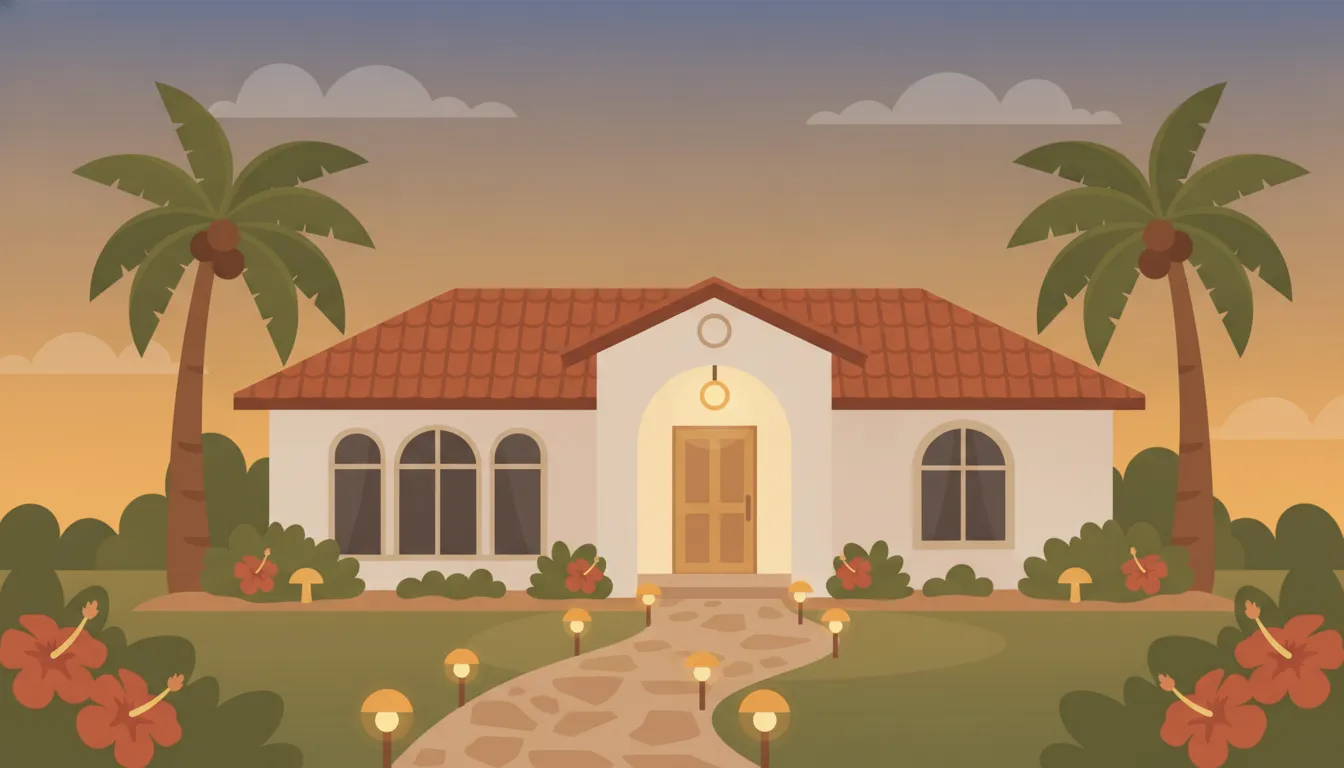
After sunset, your home's best features can disappear while dark walkways, entries, and side yards create avoidable safety concerns. The right lighting plan can make the property feel more welcoming, easier to navigate, and more secure without turning the yard into a harshly lit commercial space.
Outdoor lighting installation works best when it balances curb appeal, visibility, and durability. Path lights can guide guests, accent fixtures can highlight trees or architectural details, and motion-activated security lights can improve visibility near entrances. In coastal Florida, weather-resistant materials and properly protected wiring also matter.
A professional design helps coordinate those choices with your home's layout and the conditions around the Treasure Coast and Palm Beaches. Schedule professional outdoor lighting installation when you are ready to turn a darker exterior into a more attractive, usable part of your home. Start by seeing how thoughtful placement changes the way your property looks from the street.
How Outdoor Lighting Installation Boosts Curb Appeal
Your home can look welcoming in the daytime and disappear into the darkness after sunset. Outdoor lighting installation helps you keep the architectural details, landscaping, and entry areas visible when neighbors or guests arrive in the evening. A thoughtfully lit home feels cared for without looking overly bright or commercial.
Schedule Service for professional outdoor lighting installation to plan a lighting layout that fits your home, property, and the Treasure Coast climate.
Use light to reveal the features you already love
Effective curb-appeal lighting is not about placing a bright fixture at every corner. It is about directing light where it creates depth and visual interest. Uplighting can draw attention to a palm, mature oak, textured wall, column, or other vertical feature. When aimed carefully, it adds shape without washing the entire front of the home in glare.
Downlighting creates a softer, moonlit effect from trees, rooflines, or other elevated locations. It can also help illuminate a driveway or walkway while keeping the fixture itself less noticeable. Accent lighting works on a smaller scale, highlighting a distinctive planter, water feature, architectural detail, or changes in the landscape. Layering these approaches gives the property a more natural appearance than relying on one floodlight.
Make walkways and entrances feel intentional
Path lights can guide visitors from the driveway to the front door and make changes in elevation easier to see. Low, shielded fixtures are often more comfortable to look at than lights aimed directly toward the house or sidewalk. At the entry, balanced lighting can bring out the door, porch, house numbers, and surrounding plantings while supporting a clear, welcoming arrival.
This matters in Florida, where outdoor spaces are used throughout much of the year. A well-lit patio, garden edge, or front walkway can extend the visual appeal of your property into the evening. It can also help your home stand out for the right reasons along the Palm Beaches and Treasure Coast, where landscaping is an important part of the streetscape.
The National Association of Realtors identifies landscape lighting as a curb-appeal feature that can add style, safety, and ambiance. Its guidance specifically points to uplighting trees and architecture, downlighting for a moonlit feel, and accent lighting for focal points. Academic research likewise supports the broader idea that well-planned lighting can improve curb appeal by highlighting architecture and landscaping: review the landscape-lighting research.
Professional planning also helps prevent common appearance problems, such as exposed wiring, uneven brightness, harsh glare, or fixtures that compete with the home instead of complementing it. The goal is a comfortable nighttime view that makes the property feel finished, safe to approach, and connected to its landscape.
Why Outdoor Lighting Installation Improves Home Security
A dark side yard, unlit driveway, or shadowed doorway can make it harder to see what is happening around your home. A thoughtful outdoor lighting installation improves visibility where it matters most, including entryways, walkways, garages, gates, and other areas where someone could approach unnoticed. The goal is not to flood the property with harsh light. It is to remove avoidable hiding spots and help your family see clearly when arriving, leaving, or checking the property after dark.
Light entryways and walking paths
Start with the routes people use every day. A fixture near the front door can illuminate the lock, steps, and immediate landing. Path lighting can make changes in grade, landscaping edges, and obstacles easier to see. Lighting at side and rear entrances can also improve visibility around less frequently used access points. Guidance from the CDC's National Institute for Occupational Safety and Health emphasizes keeping entrance and exit doors visible and maintaining clear, accessible paths: CDC outdoor safety guidance.
Good placement also supports other security tools. If you use cameras, lighting can help the camera capture the intended area instead of leaving a blind spot in a dark corner. Fixtures should be aimed to light the approach without shining directly into a camera lens or creating glare that makes faces and objects harder to identify.
Use motion-activated fixtures strategically
Motion-activated lights add a second layer of awareness. When movement triggers a fixture near a driveway, side gate, or rear door. The sudden change in light can draw attention and make the area less comfortable for someone who wants to go unnoticed. It can also alert homeowners that someone or something is moving nearby. Motion lighting should be positioned carefully so normal activity, pets, or passing vehicles do not cause constant activation. A professional can help choose useful detection zones, mounting heights, and light levels.
Research supports the broader security value of better lighting, while still leaving room for sensible expectations. A randomized New York City street-lighting experiment from the National Bureau of Economic Research associated lighting upgrades with reductions in assaults and robberies: NBER street-lighting research. A review from the College of Policing likewise reports an average crime reduction of about 21% in areas with improved street lighting compared with areas without the improvement: College of Policing lighting research. These findings do not mean lighting can prevent every crime. They do show why reducing darkness and improving visibility can be a practical part of a broader home-security plan.
For the best result, combine consistent pathway and entry lighting with appropriately placed motion fixtures, secure doors, visible house numbers, and well-maintained landscaping. The right design makes your property easier to navigate and observe without turning your yard into an overlit space.
Popular Outdoor Lighting Options for Florida Homes
The right fixture depends on what you want people to see, where your property needs more visibility, and how the lighting will handle Florida weather. A balanced plan often combines softer landscape lighting with brighter entry or security fixtures, so the yard feels welcoming without creating harsh glare.
Path and walkway lights
Path lights are short fixtures that cast light downward along walkways, steps, and garden edges. They work well for coastal Florida yards where rain, sandy soil, or lush landscaping can make paths harder to see after dark. Space them to create an even, comfortable route rather than a row of bright spots.
Landscape and spot lights
Landscape lights add broad, low-level illumination around planting beds, walls, driveways, and outdoor living areas. Spotlights produce a narrower beam, making them useful for drawing attention to a palm, entry feature, sign, or other focal point. Aim them carefully so the light stays on your property and does not shine into a neighbor's windows.
Accent uplights for trees and architecture
Uplights sit near the ground and point upward to reveal the shape of a tree, column, textured wall, or roofline. They are a good choice when you want curb appeal without lighting every part of the yard. In a coastal setting, fixtures should be selected and positioned with moisture and salt exposure in mind.
Security and motion-sensor floodlights
Floodlights cover a wider area than spotlights and are commonly used near garages, side gates, driveways, and back doors. Motion sensors can turn the light on when someone approaches, which is helpful for visibility and security while avoiding an all-night glare. Proper placement matters because an overly bright or poorly aimed fixture can create shadows instead of eliminating them.
Porch and entry lights
Porch sconces, ceiling fixtures, and entry lanterns make house numbers, locks, thresholds, and steps easier to see. They are especially useful at frequently used entrances, where a warm, steady light can improve both arrival safety and the home's appearance.
Permanent exterior lighting
Permanent lighting systems can provide consistent illumination along rooflines, patios, architectural details, or larger landscapes. They are a practical option for homeowners who want a coordinated look throughout the year instead of temporary holiday or seasonal fixtures.
Many landscape systems use low-voltage lighting, which operates at a reduced voltage through a transformer and can be suitable for selected outdoor applications. It is not the same as simply connecting fixtures wherever convenient. A professional outdoor lighting installation can match the fixture type, wiring method, controls, and placement to your home's layout. Fixture pricing varies widely, so it is best to compare the complete plan rather than choosing based on the price of one light alone.
DIY vs. Professional Outdoor Lighting Installation
A low-voltage lighting kit can be a practical weekend project when you want to add a few path lights or accents around a garden bed. These systems use a transformer to reduce household voltage, and many are designed for homeowners to assemble with basic tools. The right choice depends on more than the fixture count, though. Consider where the wiring will run, how exposed the system is to weather, and whether the project connects to your home's existing electrical system.
For a simple, temporary layout on an accessible part of the property, DIY may be reasonable. Line-voltage fixtures, hardwired lights, rooftop lighting, permanent installations, or a system near a pool or other wet area deserve a more cautious approach. A professional can also help prevent a design that looks bright at first but leaves walkways, entries, or camera views unevenly lit.
| Factor | DIY Low-Voltage Kit | Professional Installation |
|---|---|---|
| Wiring & safety | Usually simpler to connect, especially for short runs and basic path lighting. The homeowner must still protect connections from moisture, avoid damaged cable, and follow the kit instructions. | A licensed electrician plans cable routes, connections, protection, and fixture placement. Proper professional wiring helps reduce risks such as short circuits and water damage in outdoor settings, as noted in the supporting research. |
| Code compliance | Low-voltage kits may be straightforward, but the project still needs to follow manufacturer directions and any applicable local requirements. Rules can be easy to overlook when adding lights to an existing property. | The electrician evaluates the installation against applicable electrical requirements, permits, and local rules. Professional planning supports compliance with local bylaws and safety standards, including outdoor lighting requirements described in this compliance research. |
| Coastal durability (salt-air) | Convenient for small projects, but the homeowner must select suitable fixtures and protect connections from Florida humidity, rain, and salt air. Lower-quality components may corrode sooner in coastal locations. | A pro can recommend outdoor-rated, corrosion-resistant materials and install them with drainage and connection protection in mind. This is especially useful for homes near the Treasure Coast or Palm Beaches. |
| Warranty | Coverage depends on the kit manufacturer. Installation mistakes, modified components, or water intrusion may create questions about what the product warranty covers. | Coverage depends on the contractor and products selected. Ask what is included in writing, including parts, labor, and service after installation. |
| Best for | A few accessible path, garden, or accent lights where the transformer and wiring can be placed safely without modifying household circuits. | Line-voltage or hardwired lighting, rooftop or permanent systems, larger layouts, wet-area projects, difficult wiring routes, and coastal installations where long-term reliability matters. |
There is no need to hire a professional for every small landscape-lighting adjustment. If you are unsure whether a proposed system is truly low voltage. Or if wiring must pass through walls, ceilings, pavement, or a wet location, pause before connecting it. A licensed electrician can explain the options and design a safe, durable solution without forcing you into a larger project than your home needs.
What to Expect From a Professional Outdoor Lighting Installation
A professional project should feel organized from the first conversation through the final evening walkthrough. The goal is not to place identical fixtures around every property. A tailored plan accounts for your home's architecture, walkways, landscaping, entry points, outdoor living areas, and the conditions around your yard. Professional installation can provide lighting solutions designed for specific areas of a home or business, rather than relying on a one-size-fits-all layout.
- On-site consultation and layout. The electrician reviews the property with you and discusses what you want the lighting to accomplish. That may include making a walkway easier to see, highlighting trees or architectural features, improving visibility near doors, or creating a more comfortable patio. The layout identifies fixture locations, lighting angles, coverage, and areas where glare or shadows should be avoided.
- Fixture and material selection matched to your yard. The right equipment depends on the space, exposure, landscape, and desired effect. Your installer helps select suitable path lights, accent fixtures, floodlights, controls, and other materials. Outdoor-rated products and durable components are especially important in Florida, where humidity, storms, and coastal air can affect exterior equipment.
- Safe wiring, transformer, and conduit or grounding work. The electrical plan is installed with safety in mind. For low-voltage systems, a transformer reduces household voltage to a level appropriate for the lighting system. The electrician routes wiring carefully, protects connections from moisture, and completes any needed conduit or grounding work. These details help reduce risks such as short circuits, water intrusion, and premature failures.
- Installation of the fixtures. Once the layout and materials are confirmed, the installer places and secures each fixture. Lights are aimed to illuminate the intended surface without shining unnecessarily into windows, neighboring properties, or the sky. Wiring is arranged neatly, and disturbed landscape areas are treated with care during the work.
- Final test, adjustment, and walkthrough. The system is tested after installation, including fixture operation, controls, coverage, and timer or sensor settings. The electrician makes final adjustments so paths, entries, landscaping, and outdoor spaces receive the intended light. You also receive a walkthrough explaining how the system works and what to watch for over time. My Electrician, Inc. backs services with a 2-year written warranty on parts and labor, providing added reassurance after the project is complete.
For a lighting plan built around your property instead of a generic package, learn more about professional outdoor lighting installation from My Electrician, Inc.
Outdoor Lighting Installation Costs to Plan For
Outdoor lighting costs depend less on a single fixture price than on the size and condition of the property. A small walkway project may require only a few low-voltage fixtures, while a larger plan could include landscape accents, security lights, trenching, controls, and new wiring. For planning purposes, HomeAdvisor reports that a typical outdoor landscape lighting installation ranges from about $1,000 to $7,500. Most homeowners spend around $4,000, with many projects falling between $3,000 and $6,000. These are general national figures, not a quote for your home. Review the HomeAdvisor cost breakdown.
Typical installed costs by fixture
Fixture type and intended use create much of the price difference. HomeAdvisor lists these approximate installed ranges:
- Low-voltage landscape lights: about $90 to $150 per fixture.
- Outdoor security lights: roughly $350 to $500 per fixture.
- Floodlights: approximately $250 to $800 per fixture.
A low-voltage fixture usually uses a transformer to reduce the electrical voltage for landscape lighting. Security lights and floodlights may require more substantial mounting, wiring, controls, or aiming, which can increase labor and material costs. The right mix depends on whether your priority is a brighter walkway, highlighted landscaping, a safer entry, or broader coverage around the property.
What can change the total project cost?
The number of fixtures is the most obvious factor, but it is not the only one. New construction or an open yard may be easier to wire than a finished landscape where access is limited. If wiring must run underground, trenching and underground wiring can add about $3 to $5 per linear foot, according to HomeAdvisor. The distance from the power source, the condition of existing wiring, soil and hardscape, and the need to repair disturbed areas can all affect the final scope.
Retrofit projects may also cost more than expected if existing circuits, junction boxes, or outdoor receptacles need correction before new fixtures are installed. Line-voltage lighting and low-voltage lighting have different equipment and installation requirements, so a professional should evaluate which approach fits the property and the intended use.
Professional work helps protect the investment through appropriate outdoor-rated equipment, sound wiring, proper placement, and testing. Ask for the scope in writing, including fixtures, wiring, controls, labor, and warranty terms. A written 2-year warranty on parts and labor can add meaningful value, especially in Florida's heat, humidity, storms, and coastal air. For a project-specific recommendation and free estimate, visit the professional outdoor lighting installation service page.
Coastal Florida Lighting and the My Electrician FL Difference
Outdoor lighting in coastal Florida has to do more than look attractive after sunset. Salt air, high humidity, heavy rain, and frequent lightning can all affect fixtures, connections, and wiring over time. A system that works well in a dry inland climate may need different materials and installation details near the Treasure Coast or Palm Beaches.
Choose materials that can handle salt air and humidity
Salt carried in coastal air can settle on metal surfaces and gradually accelerate corrosion. Humidity and rain can also find their way into poorly sealed housings, creating conditions for rust, failed connections, flickering lights, or repeated repairs. For that reason, outdoor fixtures should be selected for their location, exposure, and intended use, not just their appearance.
Moisture-resistant fixtures, marine-rated or weather-rated materials, and properly sealed housings can help an installation hold up in a demanding environment. The right choice may vary between a covered porch, an open walkway, a pool-adjacent area, and a home directly exposed to ocean air. Professional installation also includes checking existing wiring, connections, and fixture seals so the system is not relying on a vulnerable point that is easy to overlook.
Plan for storms, lightning, and power surges
Florida storms bring another consideration: lightning and sudden power surges. Outdoor lighting circuits and connected equipment can be exposed to electrical events even when a storm does not appear to strike the property directly. A thoughtful design should account for circuit protection, grounding, weather exposure, and the way lighting equipment connects to the home's electrical system.
When lights flicker after a storm, a fixture stops working, or a breaker trips repeatedly, replacing the bulb may not solve the underlying issue. My Electrician FL uses infrared cameras and circuit analyzers to help identify heat patterns, wiring problems, and circuit irregularities more accurately. That approach can make troubleshooting more precise while helping protect your home and the investment in its lighting system.
Why professional experience matters near the coast
My Electrician, Inc. has been a licensed Florida electrical contractor since 2000 and serves homeowners and businesses across the Treasure Coast and Palm Beaches corridor. From Palm Beach Gardens through Vero Beach. The team understands that a durable outdoor lighting project depends on both the design and the details behind it, including appropriate materials, protected connections, and careful testing.
Customers also have access to 24/7 emergency electrical service when an urgent problem cannot wait. Services are backed by a 2-year written warranty on parts and labor, giving homeowners clear expectations after the work is complete. If coastal conditions have damaged an existing system or you are planning a new one, Schedule Service for professional outdoor lighting installation and discuss the right approach for your property.
Schedule Service by calling 877-762-7483 for professional outdoor lighting installation and get a clear plan for your walkways, entrances, and landscape lighting before the evening rush.
Frequently Asked Questions
What is the average cost of installing outdoor lighting?
Outdoor lighting projects commonly range from about $1,000 to $7,500, with many homeowners spending near $4,000. Your total depends on the number and type of fixtures, wiring, trenching, access, and whether existing circuits can be reused. For reference, HomeAdvisor outlines common outdoor lighting cost ranges, but an on-site assessment is the most reliable way to price a specific Florida property.
Do I need an electrician to install outdoor lighting?
Use a qualified electrician for line-voltage lighting, hardwired fixtures, new circuits, outdoor receptacles, or work that connects to your home's electrical panel. Outdoor wiring must be protected from moisture and installed correctly for the conditions around your home. Low-voltage landscape lighting may be simpler, but professional installation can still help with layout, weather protection, code requirements, and long-term reliability.
Can I install outdoor lighting myself?
Some low-voltage kits are designed for homeowner installation, especially when the transformer plugs into an existing outdoor receptacle. Stop and call an electrician if the project involves buried wiring, a panel connection, damaged cables, recurring tripped breakers, or water intrusion. In coastal Florida, salt air, humidity, and storms make durable materials and careful sealing especially important.
What type of outdoor lighting adds the most security?
A balanced plan usually combines steady lighting at entrances and walkways with motion-activated fixtures near likely approach points. Keep doors, paths, and corners visible without aiming bright lights into windows or creating glare. Lighting can support cameras by reducing dark areas, but it should complement, not replace, locks, alarms, and other security measures.
What is the best outdoor lighting for curb appeal?
Low-voltage LED path lights, carefully placed uplights, and warm accent fixtures are versatile choices. Uplighting can highlight trees or architectural details, while downlighting and path lighting add depth and make outdoor areas easier to use after dark. The best plan balances appearance, visibility, fixture durability, and the way your home's landscaping looks from the street.
Ready to Schedule Your Outdoor Lighting Installation?
A well-planned outdoor lighting installation can make your walkways safer, highlight the features you love, and reduce dark areas around entryways. My Electrician FL helps Treasure Coast and Palm Beaches homeowners choose fixtures that fit their home. Their yard, and the coastal climate, then installs them with weather-protected wiring and durable materials.
Schedule Service now by calling 877-762-7483 to talk through your lighting goals and get a clear, written plan for your property.
Every project is backed by a 2-year written warranty on parts and labor, and our team is available 24/7 if an electrical issue ever needs urgent attention. A focused consultation is the quickest way to turn your curb appeal and security goals into a practical lighting plan.