
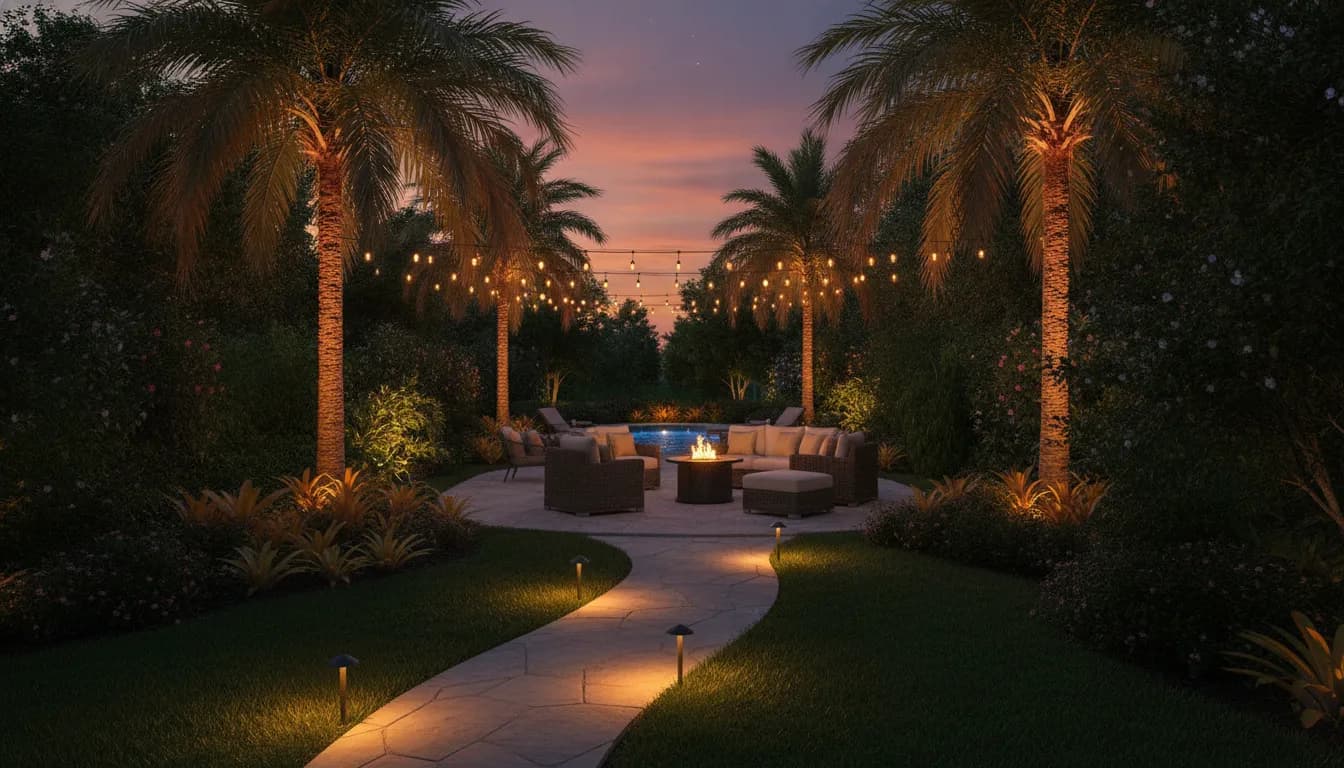
Florida evenings invite you outside, but a dark walkway, shadowed entry, or patio that disappears at sunset can limit how much you enjoy your property. The right lighting can make outdoor areas easier to navigate, help reveal potential hazards, and support comfortable time outdoors after dark. The U.S. Department of Energy also recommends balancing visibility and safety with responsible light placement to avoid unnecessary glare and environmental impact.
The best outdoor lighting ideas combine weather-rated fixtures, appropriately sized low-voltage or line-voltage systems, and controls such as timers or sensors. Start with how each area is used, then choose lighting that improves visibility without washing the entire landscape in harsh light.
From a front walk to a covered patio or poolside gathering area, each space benefits from a different mix of brightness, direction, and control. Matching the fixture to the activity and the setting creates a more useful, inviting result.
Schedule Service with My Electrician FL to turn your outdoor lighting ideas into a safe, weather-ready installation. Call 877-762-7483 to start planning lighting that fits how you use your Florida home.
Outdoor Lighting Ideas to Match Each Space
A walkway that disappears after sunset, a patio that feels uninviting, or an entry that is difficult to see can make your outdoor space less comfortable and less useful. The right fixture depends on what you want to see, how people move through the property, and whether the light needs to welcome guests, highlight landscaping, or discourage unwanted activity. Outdoor lighting can support safe navigation, hazard detection, and enjoyment of outdoor areas after dark, according to the U.S. Department of Energy.
Path Lights
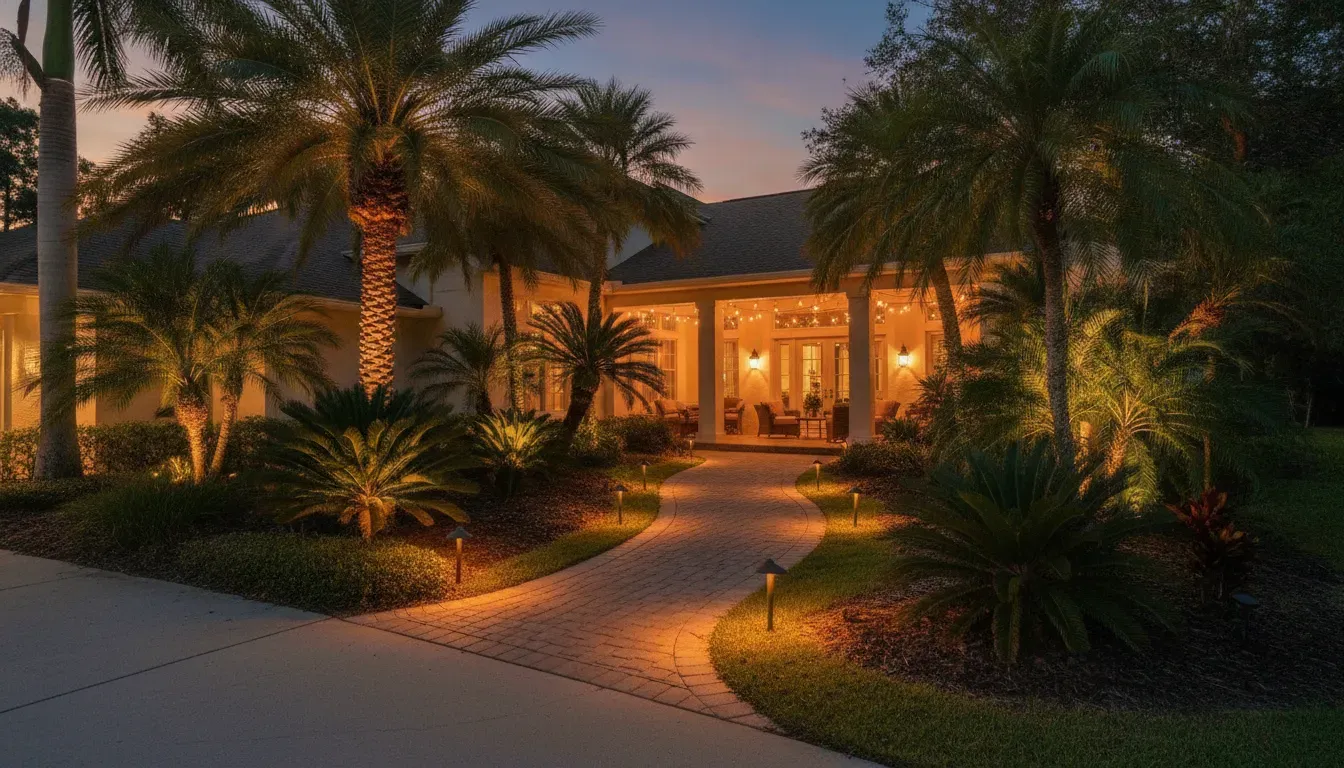
If stepping stones, walkways, or changes in grade become hard to see at night, path lights are a practical starting point. These low fixtures cast light along the route without requiring a bright beam across the entire yard. Place them near walkways, steps, and transitions between the driveway, front door, pool area, or patio. Even spacing helps people follow the path comfortably, while thoughtful aiming reduces glare and dark gaps.
Path lighting should guide movement rather than overwhelm it. A licensed electrician can help determine fixture placement, wiring, and the right outdoor-rated equipment for Florida rain and humidity.
String Lights
An empty patio can feel unfinished even when the furniture is in place. String lights add a warm, inviting atmosphere above a seating area, along a covered patio, or around a pergola. They can be a cost-effective option for homeowners who want a welcoming outdoor setting without illuminating every part of the yard. String lights are often recommended as a budget-friendly patio project, but the installation still needs secure mounting and weather-appropriate connections.
Use them to define the area where people gather, then keep nearby paths and steps separately lit so decorative light is not asked to do a safety job.
Security and Accent Lighting
An unlit front entry, side gate, or driveway can leave homeowners uncertain about what is happening outside. Security lighting can focus on entry points and other vulnerable areas, using dusk-to-dawn controls or motion sensors when appropriate. Research reviewed by Arizona State University's Center for Problem-Oriented Policing associates improvements in lighting with greater confidence in personal safety and less fear of crime. Read the lighting and crime-prevention research for context.
Accent or uplight fixtures serve a different purpose. They draw attention to a tree, textured wall, architectural feature, or landscaped focal point. Combining modest accent light with targeted security fixtures can make the property easier to navigate without flooding the whole yard with glare. For a coordinated plan, consider professional outdoor lighting installation that matches each space to its practical purpose.
Choosing Outdoor Lighting Ideas That Stand Up to Florida Weather
Florida outdoor lighting has to do more than look attractive on installation day. Rain, high humidity, intense heat, and salt air can test every exposed fixture, connection, and finish around your home. Choosing equipment designed for outdoor conditions helps protect your investment and keeps walkways, patios, entries, and landscaping useful after dark.
What IP Ratings Mean
When comparing fixtures, look for a clearly stated rating for wet locations or outdoor use. An IP rating describes how well an enclosure protects its internal components from solid particles and moisture. You do not need to memorize rating codes to make a smart choice. But you should avoid fixtures that are approved only for dry indoor areas or that provide no clear outdoor-use guidance.
A weather-rated fixture is designed to handle exposure that an indoor fixture is not. In Florida, that distinction matters even under a covered patio. Wind-driven rain and persistent humidity can reach outlets, junctions, sockets, and connections over time. Weather-rated equipment helps reduce the risk of premature damage and corrosion from rain and humidity, a concern also noted in landscape-lighting guidance from Ground Source.
Placement still matters. A rated fixture should be installed with the correct box, connector, seal, and mounting method for its location. A fixture cannot compensate for an exposed connection, pooling water, or an improvised splice.
Choosing Corrosion-Resistant Fixtures
Salt air makes material selection especially important for homes near the coast. Look for durable exterior finishes and components intended for repeated outdoor exposure, rather than choosing solely by appearance or the lowest price. Corrosion may begin as a discolored finish, flickering lamp, or loose connection before becoming an obvious failure.
Also consider how the light is aimed. The U.S. Department of Energy explains that unnecessary, excessive, misdirected, or mistimed light wastes energy and can disrupt the environment. A weather-ready design should therefore be deliberate: illuminate the walking surface, steps, entry, or landscape feature that needs visibility without shining directly into a neighbor's window or scattering light into the sky. See the Department of Energy's guidance on responsible outdoor lighting for the broader safety and environmental balance.
Installing outdoor lighting safely involves more than swapping bulbs. A licensed electrical contractor can select wet-location equipment, protect connections, route wiring appropriately, and confirm that the finished system is safe for your home's conditions. That professional review is especially valuable when fixtures are near water, buried wiring, ladders, or existing electrical equipment.
Low-Voltage vs. Line-Voltage Lighting: What Florida Homeowners Should Know
Choosing between low-voltage and line-voltage lighting depends on the space, the brightness you need, and how the system will be installed. Both can support practical outdoor lighting ideas, but they are suited to different jobs around a Florida home.
| Consideration | Low-voltage lighting | Line-voltage lighting |
|---|---|---|
| Voltage | Uses reduced voltage supplied through a transformer. | Uses standard household voltage and hardwired electrical connections. |
| Safety | Generally safer for landscape applications when installed correctly. | Requires greater care because the system connects directly to household power. |
| Brightness | Provides controlled illumination for paths, planting beds, steps, and accents. | Can provide more brightness for larger or activity-focused areas. |
| Installation complexity | Usually easier to position and adjust as the landscape changes. | More complex hardwired work may require permitting, code review, and professional installation. |
| Best use for Florida homes | Landscape lighting, walkways, garden accents, and gentle architectural highlights. | Bright patios, decks, outdoor kitchens, and other areas where strong illumination is needed. |
Low-voltage is often the practical choice for landscape installations because it is generally safer and easier to install than line-voltage lighting. It can define a walkway, reveal changes in elevation, or highlight landscaping without overwhelming the view. That makes it useful when the goal is comfortable navigation and outdoor enjoyment rather than maximum brightness. The right placement still matters, especially in Florida, where rain, humidity, and salt air can affect outdoor equipment.
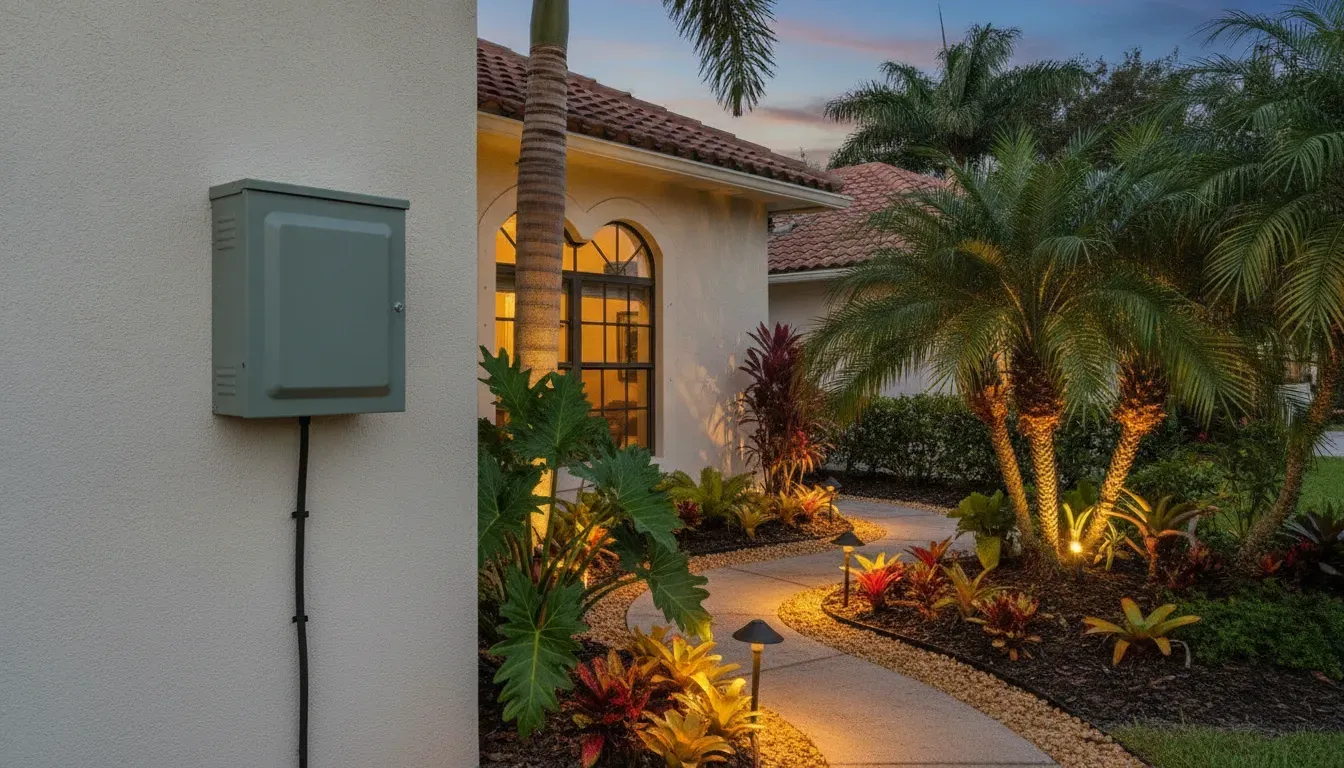
Line-voltage lighting may be the better fit for a bright patio or deck, particularly when the area needs dependable illumination for cooking, dining, or entertaining. Because it involves household electrical power and hardwired connections, a licensed electrician should handle the work and confirm that the installation is code-compliant. Before choosing fixtures, review the steps for a successful lighting installation so the design, wiring, controls, and weather exposure are considered together.
Timers, Sensors, and Smart Controls for Efficient Florida Evenings
Outdoor lighting should work when you need it, then step back when it is no longer serving a purpose. A simple control plan can keep a walkway visible for evening arrivals, illuminate a patio while you are using it, and avoid leaving every fixture on until sunrise. Timers, photocells, and motion sensors can improve energy efficiency while also supporting security.
Start with the lighting zones around your property. Common controls include:
- Timers can schedule landscape or patio fixtures for the hours when your household typically uses those spaces.
- Photocells respond to changing daylight, which can be useful when sunset shifts throughout the year.
- Motion sensors are a practical choice for side yards, driveways, gates, and other areas that need light when someone approaches rather than all night.
These controls also help make lighting more purposeful. The U.S. Department of Energy recommends balancing nighttime visibility and safety with environmental considerations, since unnecessary, misdirected, or mistimed light wastes energy and can disrupt ecosystems. Thoughtful outdoor lighting design should direct light where it helps, limit glare, and avoid brightening neighboring windows or the sky.
Smart Controls Worth Considering
Wi-Fi-connected timers can make it easier to adjust schedules without opening an outdoor enclosure, while app scheduling may help coordinate different zones for patios, paths, and entry areas. Motion zones can keep activation focused on the portion of the property where movement occurs. These features are useful when they simplify control, but they should not replace careful fixture placement or proper installation.
LED fixtures paired with responsible timing can reduce light at night by as much as 80 to 90%, according to the Department of Energy. That figure is a potential, not a promise for every property, because results depend on the fixtures, schedule, coverage, and existing system. Targeted, efficient lighting can provide visibility for navigation and hazard detection without creating constant glare.
For a dark-sky-mindful approach:
- Use the lowest useful brightness for each zone.
- Shield fixtures where possible and aim beams downward.
- Schedule decorative lighting to turn off after the evening winds down.
A licensed electrician can help separate circuits or zones so your controls match how you actually use your Florida outdoor spaces.
What Outdoor Lighting Costs: Budgeting a Florida Installation
Outdoor lighting costs depend less on a single fixture price than on the complete installation plan. A small patio project and a property-wide landscape system may both use attractive LED fixtures, but the electrical work behind them can be very different. A professional evaluation helps you compare options based on how you want to use each outdoor area, how long the wiring runs must be, and how Florida conditions may affect the installation.
What affects the project cost?
Outdoor lighting costs depend less on a single fixture price than on the complete installation plan. A small patio project and a property-wide landscape system may both use attractive LED fixtures, but the electrical work behind them can be very different. The number of fixtures is one of the clearest cost drivers, and other factors shape the final flat-rate quote as well:
- Fixture type. Path lights, spotlights, wall fixtures, step lights, and security lights have different construction, mounting, and performance requirements.
- Transformer capacity. The transformer must be sized for the total system, with enough capacity for the planned fixtures and appropriate room for safe operation.
- Wiring runs and site conditions. Longer runs can require more cable and additional planning, and routing through established landscaping may take more care where tree roots, dense plantings, hardscape, or other underground obstacles make trenching difficult.
- Labor and materials. Safe connections, weather-appropriate equipment, code-compliant installation, and thoughtful fixture placement all affect the finished result.
A licensed electrician can identify these conditions before work begins rather than treating them as surprises after installation starts. In Florida, weather-rated fixtures are especially important because humidity and rain can contribute to corrosion and damage when equipment is not suited to the environment. Weather-rated fixtures help protect against those conditions.
Build a plan that fits your priorities
You do not have to light every part of the property at once. If the goal is to make an entry safer, start with the walkway, steps, and door. If the priority is outdoor entertaining, focus on the patio or deck and add accents around nearby landscaping. String lights can be a budget-friendly way to create a warm, inviting patio atmosphere, although they still need to be installed and supported safely for the location. String lights are often considered a lower-cost landscaping option.
My Electrician provides transparent, upfront flat-rate quotes so you can understand the recommended work before approving it. Ask about available current coupons and deals when reviewing your options. A professional installation can help protect the lighting investment by matching the equipment, wiring, and controls to your home's needs and Florida's outdoor conditions.
Before and After: Scenes That Transform Florida Outdoor Spaces
The most useful outdoor lighting changes are often easy to picture from the front door. A dark walkway becomes easier to follow, an unused patio feels ready for company, and a dim entry no longer leaves you wondering what is just beyond the steps. Outdoor lighting can support safe navigation, hazard detection, and enjoyment after dark, when it is planned around how your family actually uses the property.
From a dark walkway to a clear path home
Before: After dusk, the walkway from the driveway disappears into shadow. You slow down near a step, watch for uneven pavers, and use your phone light when carrying groceries.
After: Low, evenly spaced path lights define the route without creating harsh glare. The landing, changes in elevation, and edge of the planting bed are easier to see. The result is not a brightly lit yard. It is a more comfortable path from the car to the door, with light placed where it serves a purpose.
The U.S. Department of Energy identifies safe navigation and hazard detection as practical reasons for outdoor lighting. See its guidance on responsible light at night for the balance between visibility and unnecessary illumination.
From an empty patio to a warm gathering space
Before: The patio looks inviting during the day but becomes an unused slab once the sun goes down. Guests stay inside because the seating area feels flat and disconnected from the rest of the home.
After: Warm string lights create a soft overhead glow, while gentle accents pick out a tree, planting bed, or architectural feature. Seating, serving areas, and walking routes remain visible without turning the patio into a spotlight. String lights can be a relatively simple way to add warmth, but they still need secure installation and weather-appropriate components for a Florida setting.
From an unlit entry to a more reassuring arrival
Before: The lanai or side entry is dark when you arrive home. You cannot easily see the steps, the door hardware, or the area beside the walkway, and that uncertainty adds worry.
After: Step lights define each change in elevation, while a properly positioned motion light responds when someone approaches. The entry feels more visible without staying fully illuminated all night. Research summarized by Arizona State University's Center for Problem-Oriented Policing found that outdoor lighting improvements can increase residents' confidence in their safety and reduce fear of crime. Lighting should support that sense of reassurance while remaining targeted and considerate of nearby homes.
Every transformation starts with the home's real trouble spots: the path that vanishes at dusk, the patio no one uses, or the entry that feels uncertain. A lighting plan built around those moments can make the property safer to navigate and more enjoyable after sunset.
Schedule Service with My Electrician FL when you are ready to act on your outdoor lighting ideas. Call 877-762-7483 for a flat-rate quote, or contact our team to discuss your project.
Frequently Asked Questions
What are some creative outdoor lighting ideas for a Florida patio?
Layer the lighting instead of relying on one bright fixture. String lights can add a warm, inviting feel above a seating area, while step lights improve footing and discreet accent lights highlight palms, garden beds, or architectural features. Path lights can guide guests from the driveway to the entry without making the space feel overlit.
Should I choose low-voltage or line-voltage landscape lighting?
Low-voltage lighting is generally the better fit for landscape beds, walkways, and many patio accents because it is safer and easier to install. Line-voltage lighting can provide more power for brighter fixtures and larger applications, but it requires more involved electrical work. The layout, fixture type, and available power should guide the choice rather than brightness alone.
Do Florida outdoor fixtures need to be weather-rated?
Yes. Outdoor fixtures should be rated for their location and exposure to rain, humidity, and salt air. Weather-rated equipment helps reduce damage and corrosion, which can shorten fixture life and create maintenance problems. A licensed electrician can match the fixture rating and materials to a covered patio, open walkway, pool area, or coastal setting.
Are timers and motion sensors worth adding to outdoor lighting?
They can make a system more useful and efficient. Timers can turn landscape and patio lights on during the hours you use the space, while motion sensors can provide light when someone approaches an entry, walkway, or side yard. Properly aimed and scheduled controls can support security without leaving unnecessary lights on all night. The U.S. Department of Energy also recommends thoughtful lighting that balances visibility with environmental considerations.
How much does landscape lighting installation cost?
There is no single useful price for every property. Cost depends on the number and type of fixtures, transformer capacity, wire-run length, access around trees or hardscape, controls, and installation conditions. A design with a few patio string lights will differ greatly from a complete system with path, accent, step, and security lighting. Request a detailed, flat-rate quote that explains the recommended equipment and labor before work begins.
Ready to Schedule Outdoor Lighting Service?
A thoughtful lighting plan can make your walkways, patio, or entry feel more comfortable while helping you use each fixture where it matters. When you are ready to turn your outdoor lighting ideas into a safe, weather-ready installation, Schedule Service with My Electrician FL. Our team serves homeowners from Palm Beach Gardens through Vero Beach, with 24/7 emergency service available when an electrical concern cannot wait.