
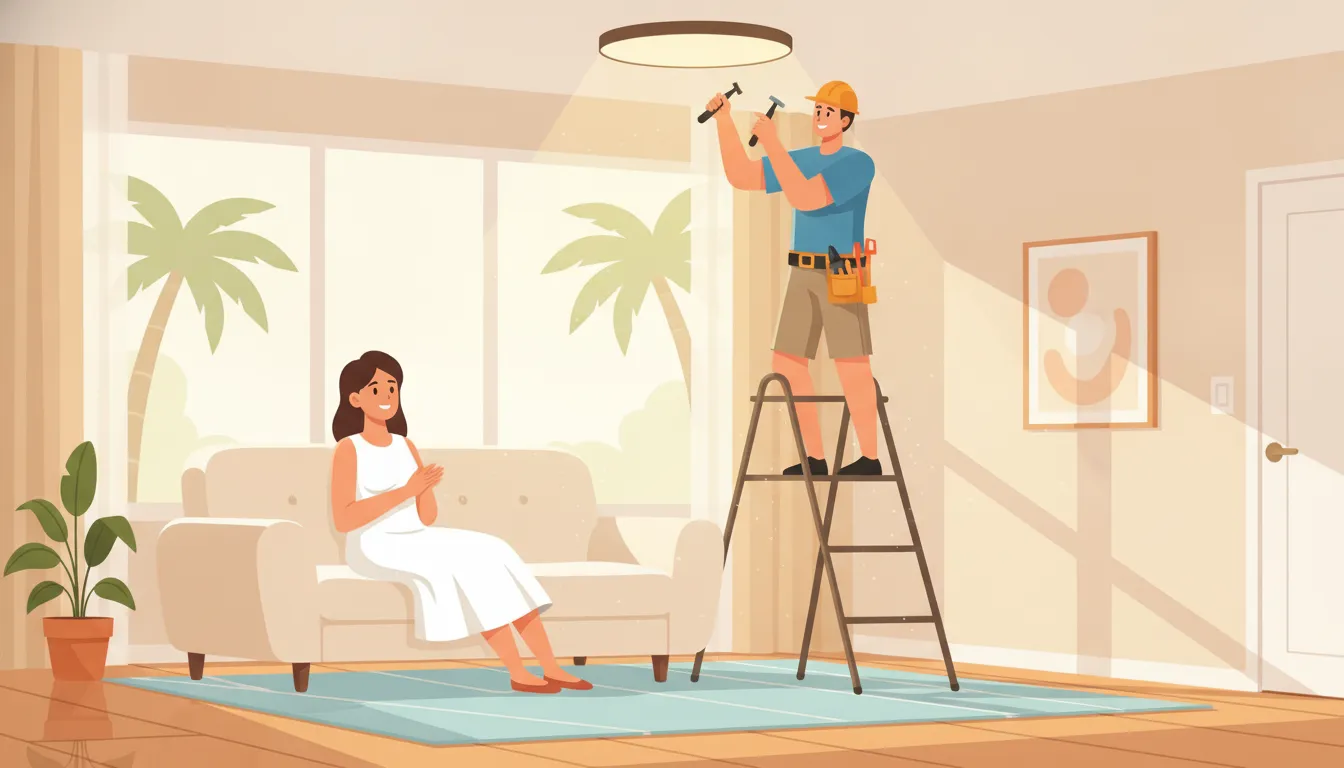
A light that flickers, dims, or suddenly goes dark is more than an inconvenience. It can point to a problem with the fixture, switch, wiring, or electrical distribution in your home. In Port Saint Lucie, warm weather, storms, and older electrical components can make dependable lighting especially important for daily comfort and safety.
For safe lighting repair in Port Saint Lucie, start with simple checks such as replacing a known-good bulb, then stop if the problem continues. A breaker trips, an outlet stops working, or you notice a burning smell. Electrical hazards can cause shock, burns, or fire, so complex wiring and recurring symptoms should be evaluated by a qualified electrician.
Some lighting issues are isolated and straightforward. Others are warning signs that deserve prompt attention, particularly when several fixtures are affected or the problem returns after a bulb change. Knowing what those symptoms can mean helps you respond calmly and recognize when professional service is the safer choice.
Schedule service today for dependable lighting repair in Port Saint Lucie. Get a free quote from a licensed residential electrician.
The Most Common Lighting Problems Port Saint Lucie Homeowners Run Into
Lighting problems often begin with a small change you notice during an ordinary evening at home. A ceiling light may flicker when the air conditioner starts, a fixture may look unusually dim. Or one room may suddenly go dark while the rest of the house still has power. These symptoms can be frustrating, but they also provide useful clues about when a simple bulb change is no longer enough.
If the problem continues after you replace the bulb, or if several fixtures are affected, schedule lighting repair in Port Saint Lucie. A professional can evaluate the fixture, switch, wiring, and related electrical components instead of treating only the visible symptom.
Flickering or Dimming Lights
Flickering is one of the most common complaints homeowners report. The light may flutter constantly, pulse when another appliance runs, or dim briefly before returning to normal. A loose connection, a worn switch, an incompatible bulb, or a problem elsewhere on the circuit can produce similar symptoms. You do not need to identify the cause yourself. Persistent flickering can signal a deeper electrical issue and deserves a professional assessment, especially when more than one light is involved.
Dead Fixtures or Lights That Will Not Turn On
A light that stops working may need nothing more than a new bulb. However, a replacement bulb that also fails, a fixture that works only intermittently, or a light controlled by a warm or loose switch points to a larger concern. The issue may involve the fixture, the switch, a connection, or the circuit supplying power. Avoid repeatedly removing covers or reaching into ceiling fixtures when the cause is unclear. Complex lighting wiring should be handled by a qualified electrician.
Breaker Trips When a Light Is Used
When a breaker trips each time a particular light or fixture is switched on, treat the pattern as a warning rather than simply resetting it over and over. The circuit may be overloaded, or the fixture and wiring may have a fault. Note which light is involved and whether other appliances are running, then arrange an inspection. A breaker is designed to interrupt power when it detects a potentially unsafe condition.
Burning Smell, Buzzing, or Heat
A burning odor near a light, switch, or outlet requires prompt attention. Buzzing, crackling, visible discoloration, or unusual heat are also reasons to stop using the fixture and keep people away from it. Electrical hazards can include shock, burns, and fire from faulty equipment or installations, according to the CDC and NIOSH. Arcing occurs when electricity jumps between circuits and can create serious heat and fire hazards. If you smell burning or see smoke, turn off power only if you can do so safely, leave the area if necessary, and seek professional help.
What a Burning Smell or Flickering Light Is Telling You
A flickering or dimming light can be easy to dismiss. But the symptoms are often trying to tell you something about the wiring behind the fixture, switch, or ceiling. A light that repeatedly loses power, a switch that feels warm to the touch. Or an odor that smells like overheated plastic are signs that something below the surface may be failing. These are the moments when it makes sense to stop treating the light as a cosmetic issue.
A warm switch or a persistent burning smell can point to overheated connections, a failing fixture, or arcing inside the wiring. Arcing, which the CDC and NIOSH describe as electricity jumping between circuits, can create intense heat and is a recognized electrical hazard. The National Fire Protection Association reports that home electrical fires account for about 13% of home structure fires and 18% of related deaths each year. Electrical injury can be serious and can include electrocution, shock, burns or arc blast, and falls.
When a burning smell near a light is fresh or strong, do not keep testing the switch. Turn the circuit off at the panel if it is safe to lock and tag out, keep everyone away, and reach out for emergency electrical assistance. Treat the symptom as a clear request for a closer look rather than something to live with until it becomes convenient.
When Should You Call a Professional for Lighting Repair in Port Saint Lucie?
Call an electrician promptly when a lighting problem continues after a safe bulb replacement or appears alongside another electrical symptom. Flickering that will not stop, outlets that do not work, a burning smell, a warm switch. Or a breaker that trips repeatedly can point to a problem beyond the fixture itself. A professional can inspect the light, switch, wiring, and related circuit instead of treating only the visible symptom. For more information, see our guide to professional lighting repair.
- Flickering or dimming that persists: If the light continues to flicker with a known-good bulb, stop troubleshooting and schedule an inspection. The issue may involve the fixture, switch, connections, or circuit.
- An outlet stops working: A dead outlet near a lighting problem may indicate a circuit issue, especially if resetting the breaker does not restore power or the breaker trips again.
- A burning smell or warm switch: Turn off the affected light if you can do so safely, keep clear of the area, and request help. Do not touch a switch or fixture that feels hot, shows discoloration, or smells like overheated plastic.
- Repeated breaker trips: A breaker that trips once may have responded to a temporary overload. Repeated trips deserve professional attention because continuing to reset it can leave an underlying electrical fault unaddressed.
These warning signs deserve attention because electrical problems can create more than an inconvenience. The National Fire Protection Association reports that home electrical fires account for approximately 13% of home structure fires and 18% of related deaths each year. Its data also estimates an annual average of about 46,652 home structure fires in which an electrical failure or malfunction contributed to ignition. With approximately $2.4 billion in direct property damage annually for 2020 through 2024. See the NFPA electrical safety information for the supporting figures.
If you see smoke, active sparking, or flames, leave the area and call 911. For a persistent but non-fire emergency, avoid opening the fixture or removing switches, and use My Electrician's contact page to request service. Prompt diagnostics can identify whether the repair involves the fixture, wiring, or a broader circuit issue before the problem worsens.
Can You Fix Lighting Problems Yourself?
Some lighting checks are reasonable for a homeowner, but the line between simple maintenance and electrical work matters. If a lamp stops working, start with the bulb and the plug. If a room goes dark after several devices run at once, you may reset a tripped breaker once. Provided there is no smoke, burning odor, buzzing, visible damage, or other warning sign. If the breaker trips again, leave it off and call for help.
The Centers for Disease Control and Prevention's NIOSH guidance says electrical work should be performed only by qualified persons trained to work on or near energized parts. That is especially important because electrical injuries can include electrocution, shock, burns or arc blast, and falls. A lighting problem that seems small can involve wiring behind a ceiling, wall, or fixture where the danger is not visible. Read the CDC's electrical safety guidance for more detail.
| Safe to do yourself | Call an electrician |
|---|---|
| Replace a bulb with the correct type and wattage, while the switch is off and the fixture is cool. | Repair or replace wiring, ceiling connections, sockets, or a fixture that is damaged, loose, or sparking. |
| Check that a lamp or plug is fully seated and try a known-working outlet without forcing anything. | Investigate flickering, repeated breaker trips, buzzing, discoloration, or lights that remain dim after a bulb change. |
| Reset a tripped breaker one time if there are no signs of damage or overheating. | Work on dimmers, switches, recessed lights, or any circuit that requires opening an electrical box. |
| Keep the area dry, stop if anything feels unsafe, and avoid touching exposed electrical parts. | Respond to a burning smell, smoke, heat, visible arcing, or any suspected problem inside a wall or ceiling. |
Do not remove a fixture cover to investigate a loose connection or attempt to repair complex ceiling-light wiring. NIOSH advises unqualified people to stay at least 10 feet from energized parts, and proper electrical work requires verifying that the system is de-energized. If you smell burning or see smoke, turn off power only if you can do so safely, keep away from the area, and seek urgent assistance.
For persistent symptoms, professional lighting repair can identify whether the issue is in the fixture, switch, circuit, or wiring. A licensed electrician can explain the repair clearly and address the underlying problem instead of repeatedly replacing bulbs.
How a Licensed Electrician Diagnoses and Fixes Your Lighting
When a light flickers, stays dim, or stops working, replacing the bulb may not solve the problem. A licensed electrician approaches the symptom as a starting point, then traces the issue through the fixture, switch, dimmer, wiring, and circuit. That process helps identify the actual cause instead of masking it with a quick replacement. Professional diagnostics are part of the full residential electrical service provided by My Electrician.
Inspect the symptom and surrounding area
The visit begins with questions and a visual inspection. The electrician may ask when the problem started, whether it affects one fixture or several, and whether the breaker has tripped. They look for loose or damaged components, heat discoloration, moisture, unusual odors, and signs that a switch, fixture, or connection has deteriorated. A burning smell, repeated flickering, or a fixture that feels unusually hot should be treated as a safety concern, not a cosmetic annoyance.
Isolate the circuit and verify it is safe
Next, the electrician identifies which circuit supplies the light and isolates it before opening the fixture, switch box, or other electrical enclosure. Proper energy-control procedures matter because a breaker position alone is not enough to assume that equipment is safe. The electrician verifies de-energization with appropriate testing before touching conductors or connections, following guidance from the CDC and NIOSH.
Only qualified persons should perform electrical work on or near energized parts. Qualified professionals are trained to recognize electrical hazards and use the appropriate personal protective equipment and safety procedures when the work requires it. Homeowners and other unqualified people should not open an electrical box or attempt to investigate exposed wiring.
Test the connections, fixture, and controls
Once the circuit is controlled safely, the electrician tests the likely trouble points. This can include wire connections, the switch, a dimmer, the fixture socket, and the supply to the circuit. The goal is to determine whether the fault is inside the light itself or farther upstream. A loose connection may produce intermittent operation, while a failed dimmer or incompatible component can cause persistent flickering or poor performance. Testing also helps distinguish a single-fixture problem from a circuit-wide issue.
Repair, replace, and test the finished work
After locating the cause, the electrician explains whether a repair, component replacement, or fixture upgrade is appropriate. They then restore power and test the light under normal operation, checking the switch or dimmer and confirming that the symptom has been resolved. If the problem involves exterior fixtures or landscape wiring, ask about outdoor lighting repair specifically. This measured process gives homeowners a safer path to dependable lighting repair in Port Saint Lucie than trial-and-error wiring.
Why Port Saint Lucie Homeowners Trust My Electrician
When a light starts flickering, a fixture stops working, or a lighting problem affects part of your home, you want more than a quick guess. You want an electrician who can identify the source, explain the repair clearly, and complete the work with safety in mind. My Electrician provides full residential electrical service, including lighting repair, diagnostics, and upgrades, so homeowners can address the immediate problem while understanding what needs attention next.
Licensing and safety compliance are central to the company's service approach. Electrical work can involve energized parts, hidden wiring, and connections that are not safe to assess by trial and error. A licensed professional can evaluate the fixture, switch, circuit, and related components instead of treating the visible symptom alone. That matters when a flickering light returns after a bulb change or when a ceiling fixture behaves differently from the rest of the room.
My Electrician also focuses on prompt, approachable service. Homeowners should not have to decode complicated technical language to make a good decision about their property. The team explains what it finds in plain terms, outlines practical options, and keeps the focus on restoring safe, dependable lighting. For background on the company and its service philosophy, visit the My Electrician about page.
Urgent symptoms receive extra attention. A burning smell, visible damage, repeated breaker trips, or a sudden loss of lighting can signal a problem that should not wait for a convenient appointment. My Electrician offers 24-hour emergency electrician service for urgent electrical concerns, including outside ordinary business hours. If you notice a serious warning sign. Turn off the affected circuit if it is safe to do so and keep away from damaged equipment while arranging professional help.
Service extends across the region from Palm Beach Gardens through Vero Beach, including Port Saint Lucie. That local reach makes it easier for homeowners to work with a residential electrical contractor familiar with the communities they serve. You can review the complete service area list or request professional lighting repair when your home needs a careful diagnosis and lasting solution.
Why Do Lights Keep Flickering Even After You Change the Bulb?
If a new bulb does not stop the flicker, the bulb may not be the problem. A loose connection in the fixture, ceiling box, switch, or circuit can interrupt power briefly and make the light pulse, dim, or flutter. The same symptom can come from a faulty dimmer that is not compatible with the bulb, an aging switch, or a circuit carrying more demand than it should.
Pay attention to when the flicker occurs. If one fixture flickers when you move the switch, the switch or a connection near that fixture may need attention. If several lights flicker together, the issue may be farther upstream in the circuit or electrical panel. Flickering that appears when an appliance starts can also point to a circuit or connection problem rather than a bad lamp.
What can cause persistent flickering?
- Loose wiring: A connection that is not secure can produce intermittent power and heat.
- A failing dimmer or switch: Worn components may not control current consistently, especially with newer LED bulbs.
- An overloaded circuit: Too much demand on one circuit can cause lights to dim or fluctuate when equipment runs.
- Arcing: Electricity can jump between circuits, a condition known as arcing. The CDC and NIOSH identify arcing as an electrical hazard that can cause burns and fires.
Do not ignore flickering that comes with a buzzing sound, warmth around the switch or fixture, a burning smell, sparks, or discoloration. These signs can indicate a loose or failing connection. My Electrician's lighting-repair guidance specifically recommends professional help when lights flicker or you smell burning. The CDC and NIOSH electrical-safety guidance also states that electrical work should be performed by qualified persons, with proper energy control and verification that the system is de-energized.
Changing a bulb is reasonable when the fixture is otherwise operating normally. Opening a switch, fixture, or ceiling box to chase a persistent flicker is different. A qualified electrician can identify the source safely and determine whether the repair involves the fixture, switch, wiring, or circuit. For homeowners who need professional lighting repair in Port Saint Lucie, schedule an evaluation instead of repeatedly replacing bulbs.
Don't wait for a flickering light to get worse. Schedule Service now and let a licensed electrician restore safe lighting to your Port Saint Lucie home.
Frequently Asked Questions
What common lighting problems require a professional electrician?
Call an electrician when lights keep flickering, a fixture stays dim or dead after a bulb change. A breaker trips, an outlet stops working, or you notice a burning smell. These symptoms can involve wiring, connections, or other electrical equipment that should be diagnosed rather than guessed at. Professional lighting repair can address the immediate fixture problem and check for a deeper electrical issue.
How do I know when to call a professional for lighting repair in Port Saint Lucie?
Call promptly if flickering affects more than one light, returns after replacing the bulb. Occurs with buzzing or heat, or appears alongside a burning odor, sparks, or a tripping breaker. Turn off the affected light if you can do so safely, keep away from damaged components, and seek emergency help for smoke or an active electrical hazard.
Can I troubleshoot ceiling lighting problems myself?
You can safely replace a compatible bulb and confirm that a switch is in the on position. Do not open a fixture, alter wiring, or work near energized parts to solve a recurring problem. The CDC advises that electrical work be performed by qualified persons trained to work on or near energized parts: CDC electrical safety guidance.
Is it safe to repair flickering lights on my own?
Usually not when the flicker continues after a bulb change. Flickering may point to a loose connection or another electrical fault, and faulty equipment or installations can create shock, burn, or fire hazards. Stop using the light if you smell burning, see scorching, or hear crackling, and have a qualified electrician assess it.
How much does lighting repair cost in Port Saint Lucie?
The cost depends on whether the issue is a bulb, switch, fixture, connection, or larger wiring problem. A professional can inspect the symptoms, identify the cause, and explain the recommended repair before work begins. Request an estimate based on the actual condition rather than relying on a generic online price.
Ready to Schedule Lighting Service?
If lighting problems continue after a bulb change, a professional evaluation can help identify the cause and keep your home safer. My Electrician FL can help with lighting repair in Port Saint Lucie and explain the next step clearly. Schedule Service by calling 877-762-7483.