
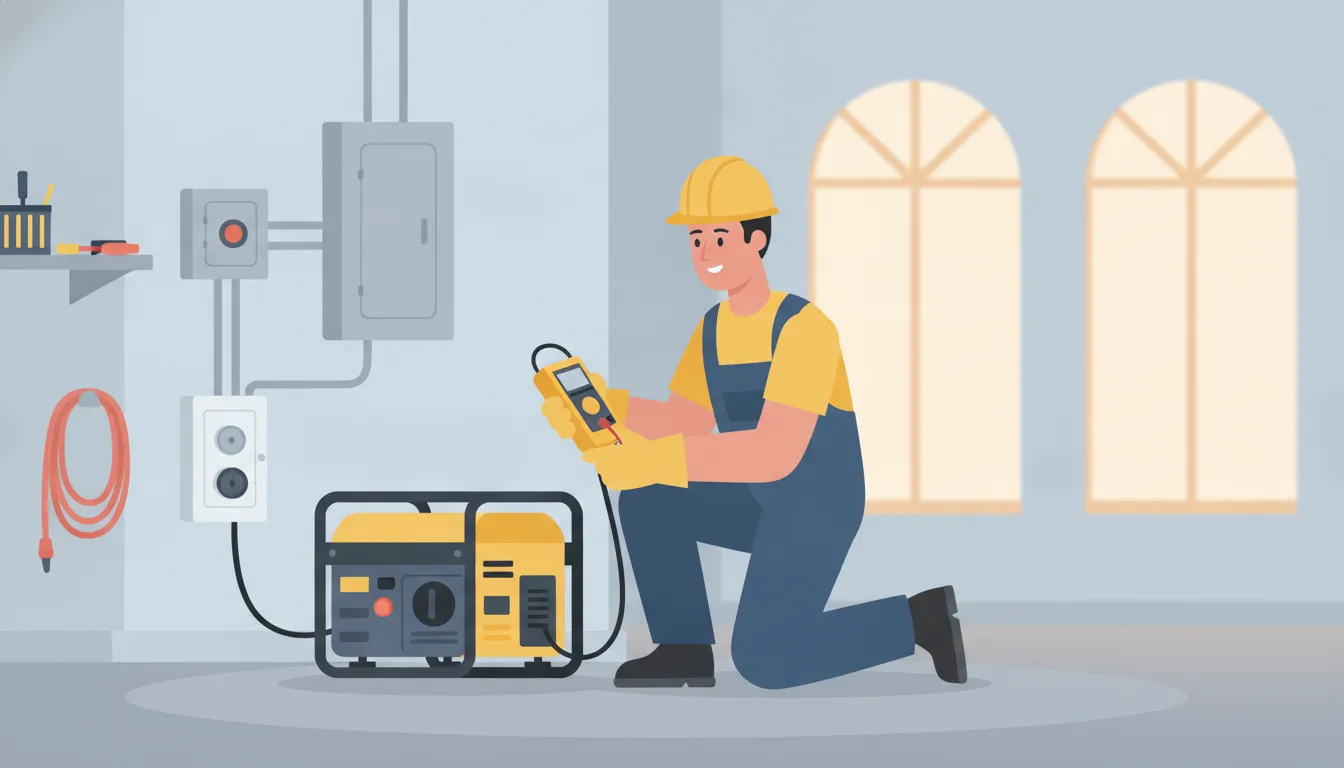
When the power goes out, a portable generator can keep essential circuits running, but connecting it to a home panel requires more than plugging in a cord. An incorrect connection can send electricity back onto utility lines, creating a serious hazard for homeowners, neighbors, and utility workers.
Learning how to install a generator interlock kit starts with understanding its safety role. The mechanical device is designed for a compatible panel. It prevents the utility main breaker and generator breaker from being on at the same time. Compatibility, inlet wiring, grounding, breaker fit, labeling, testing, and local requirements all matter. A qualified electrician should evaluate and install the complete system instead of treating the kit as a universal DIY solution.
The first step is to understand what the interlock controls, what other equipment the setup requires, and why the panel's exact design determines whether a listed kit will fit safely.
What Does a Generator Interlock Kit Do?
An interlock kit is a mechanical device designed for a compatible electrical panel. Its job is to prevent the utility main breaker and the generator breaker from being turned on at the same time. That physical separation is the central safety function, but it does not make every generator connection safe by itself.
How the interlock prevents backfeed
Backfeed occurs when electricity from a portable generator flows in the wrong direction through a home's electrical system and toward utility lines. That can create a serious hazard for utility workers and damage equipment. An interlock establishes a controlled operating sequence: the utility source is disconnected before generator power is connected. The plate then blocks the two source breakers from being on together.
This protection depends on the correct kit, panel, breaker, wiring, inlet, and operating procedure. It is not a substitute for selecting compatible equipment or having the finished installation checked.
The parts that work together
A typical interlock setup includes more than the plate mounted at the panel. The complete system may include:
- Interlock plate: The sliding or pivoting mechanical barrier that prevents simultaneous source connection.
- Generator breaker and retainer: The panel components that receive generator power and hold the breaker in its intended position.
- Power inlet: The outdoor connection point where the portable generator connects to the home's wiring through an appropriate cord.
- Conductors: The wiring that carries generator power from the inlet to the panel. Its rating and installation must match the equipment and design.
- Portable generator: The source that supplies selected household circuits during an outage, subject to its capacity and the system's design.
Some homes use other transfer equipment instead of, or in addition to, a panel-mounted interlock. The right arrangement depends on the panel's brand, model, breaker layout, main-breaker position, generator, inlet rating, and local requirements. Unusual or bottom-fed panels may require a different listed configuration, not an improvised universal fit.
Because panel work can involve energized equipment and must account for grounding, bonding, labeling, testing, and inspection, homeowners should not remove a panel cover or attempt installation from online instructions. A qualified electrician can evaluate the complete system and provide professional generator installation that is matched to the home's equipment and safety needs.
What Must Be Checked Before Installation?
The right answer to how to install a generator interlock kit starts before anyone selects a kit. An interlock is not a universal plate that fits every electrical panel. The complete setup must match the home's panel, generator, inlet, breakers, wiring, and applicable requirements.
Panel brand, model, and breaker arrangement
Begin with the exact panel brand and model, not just the manufacturer's name. The electrician should verify the panel layout, cover design, bus arrangement, available breaker positions, and the location of the main breaker. A main breaker at the bottom, sometimes called a bottom-fed or unusual panel configuration, may need a specific listed compatibility solution. It should not be treated as permission to rotate, drill, bend, or improvise a kit that was not designed for that panel.
The breaker layout also matters. The generator breaker, breaker retainer, and interlock plate must work together as a listed configuration. Manufacturer instructions may specify the allowed breaker type, position, cover alignment, labeling, and functional test. Those details cannot be confirmed safely from a generic product photo or a model name alone.
Generator, inlet, and wiring path
The generator's output and amperage must match the inlet, conductors, breaker, and intended load. The inlet is the outdoor connection point for the generator cord. Its rating and location affect the wiring path and the equipment needed inside the panel. A professional evaluation should also consider where the generator will operate, how the cable will be routed, and whether the planned setup supports safe generator placement.
Grounding and bonding should be reviewed as part of the whole electrical system. They serve different safety functions, and their treatment can depend on the generator, panel, equipment, and installation design. A kit by itself does not correct an existing wiring, grounding, bonding, or panel problem.
Panel condition and local requirements
Older, damaged, crowded, corroded, or previously modified panels may need additional work before generator equipment can be connected. The electrician should review the panel and breakers, verify the installation while de-energized, and identify any inspection, permit, utility, building-code, or manufacturer requirements that apply in the local jurisdiction. Requirements are not universal, so avoid assuming that a kit is legal everywhere simply because it is sold online.
For a complete assessment, consider professional generator installation that includes compatibility review, safety checks, testing, and customer education.
How Is a Generator Interlock Kit Installed Safely?
A safe installation is a coordinated electrical project, not simply the attachment of a metal plate to a panel cover. The interlock must match the panel, breaker arrangement, generator connection, inlet, conductors, and applicable local requirements. A qualified electrician should evaluate and complete the work, especially because parts of an electrical service can remain energized even when a branch circuit or main breaker appears to be off. Do not remove the panel cover or attempt to work near service conductors.
- Assess the existing electrical system. The electrician reviews the panel brand and model, main-breaker position, available breaker spaces, bus and wiring condition, service capacity, and the equipment that will be connected. The evaluation also considers the generator, inlet location, conductor route, grounding and bonding, and whether the home's existing equipment can support the proposed arrangement.
- Confirm compatible, listed equipment. Interlock kits are panel-specific. The correct setup may include a compatible interlock plate, generator breaker and retainer, outdoor power inlet, conductors, and the portable generator. An unusual or bottom-fed panel may require a different listed configuration. A universal-looking part or improvised fit is not a substitute for verified compatibility.
- Plan the inlet and conductor installation. The electrician selects a suitable inlet location and routes conductors between the inlet and the panel according to the equipment instructions and applicable requirements. Placement should support safe generator connection and operation. Generator location and ventilation also matter, so the complete setup should be reviewed rather than treating the panel connection as an isolated project.
- De-energize and verify before panel work. Before working inside the panel, the electrician follows an appropriate shutdown procedure and verifies the working area is de-energized. This does not mean every part of the service is automatically safe to touch. Incoming service parts may remain energized. Homeowners should stay clear and leave panel access to the qualified professional.
- Fit the interlock and connection hardware. The interlock is installed so the utility main breaker and generator breaker cannot be on at the same time. The breaker, retainer, conductors, grounding or bonding connections, and cover alignment are installed and checked as a complete system. The physical mechanism should move correctly without forcing it.
- Label, test, and document the system. Clear labels explain the operating sequence: disconnect utility power before connecting generator power, and reverse that sequence when utility service returns. The electrician performs functional testing, voltage and connection checks, safety checks, and customer instruction. Required permits or inspections are addressed when applicable to the project and local authority.
Professional generator installation and repair helps ensure the equipment works together as intended, rather than leaving the homeowner to discover a compatibility or safety problem during an outage.
How Does an Interlock Prevent Generator Backfeed?
Your electrical panel can receive power from the utility or from a portable generator, but those sources must not be connected to the home's circuits at the same time. Backfeed happens when generator electricity travels in the wrong direction toward utility lines. That can create a serious hazard for utility workers and damage equipment.
An interlock is a mechanical device made for a compatible electrical panel. It allows the utility main breaker and the generator breaker to be switched on only in an intentional, one-source-at-a-time arrangement. The plate physically blocks one breaker when the other is on. It does not simply remind someone which breaker to use, and it does not depend on memory alone. Its core job is to prevent simultaneous connection of the two sources.
What does the operating sequence look like?
At a conceptual level, the sequence is straightforward:
- Utility power is disconnected at the main breaker.
- The interlock moves into the position that permits the generator breaker to operate.
- Generator power travels through the outdoor inlet, correctly sized conductors, and generator breaker to the selected panel circuits.
- When utility power returns, the generator source is disconnected before the main breaker is restored.
The interlock is only one part of that system. A complete setup may also include a panel-specific kit, compatible breaker and retainer, outdoor inlet, conductors, grounding and bonding provisions, and the generator itself. The panel brand, model, breaker arrangement, main-breaker position, and inlet rating must all be evaluated. An unusual or bottom-fed panel may require a different listed configuration rather than an improvised fit.
What can an interlock not fix?
An interlock cannot correct wrong wiring, incompatible equipment, an overloaded circuit, poor grounding or bonding, damaged components, unsafe generator placement, or misuse of the generator. It also cannot make an unsuitable panel compatible. Follow the equipment instructions and have the installation professionally assessed, tested, labeled, and inspected as applicable. If you are researching how to install a generator interlock kit, treat the answer as a system-safety question, not a panel-cover DIY project. Have the full arrangement reviewed before operating a portable unit, including generator location, inlet, panel, and source-selection equipment.
Interlock Kit vs. Transfer Switch: Which Setup Fits?
Choosing backup-power equipment starts with the generator and the electrical system you already have. A panel-mounted mechanical interlock is designed for a compatible service panel. It physically prevents the utility main breaker and generator breaker from being on at the same time. A transfer switch or transfer panel is a separate source-selection arrangement that routes power between the utility and a generator. Neither option is automatically the right choice for every property.
The distinction matters because an interlock kit is only one part of a complete installation. The system may also require a compatible generator breaker or retainer, an outdoor power inlet, conductors, grounding and bonding work, and a properly sized generator. The panel brand, model, breaker layout, main-breaker position, generator type, and intended loads all affect equipment selection. The customer knowledge base also emphasizes that compatibility must be verified for the specific panel, breaker layout, inlet, and transfer equipment before work begins.
| Setup | How source selection works | Common fit | Key planning question |
|---|---|---|---|
| Panel-mounted mechanical interlock | A mechanical plate coordinates the utility main breaker and generator breaker. Both cannot be on together. The homeowner changes the source manually according to the labeled operating sequence. | A compatible existing panel paired with a portable generator and a properly installed inlet, when the selected circuits and generator capacity match the plan. | Is the exact panel and breaker arrangement listed for this interlock, and can the generator safely support the intended loads? |
| Transfer switch or transfer panel | The transfer equipment changes the connection between utility power and generator power. The specific controls and operation depend on the equipment and generator system. | A standby-generator system or a property where dedicated load management, different panel arrangements, or automatic transfer functions are part of the design. | Which circuits need backup power, and does the generator and transfer equipment match the service, loads, and installation requirements? |
Panel layout can create additional complications. For example, a bottom-fed or unusual panel may require a different listed configuration rather than an improvised universal fit. Manufacturer instructions can address alignment, retention, labeling, and functional testing, but they do not replace a professional assessment or any inspection and local requirements that apply to the property.
A qualified electrician can evaluate the panel, generator, inlet location, load priorities, grounding and bonding, and operating sequence before recommending an approach. My Electrician provides professional generator installation, testing, safety checks, and customer education. The goal is not simply to add hardware. It is to create a complete, correctly selected system that separates power sources, is labeled clearly, and can be operated safely during an outage.
When Should You Schedule Professional Generator Service?
Schedule a professional evaluation before connecting a generator if you are unsure whether the equipment matches your electrical panel. Compatibility depends on the panel brand and model, breaker arrangement, generator inlet, and the rest of the connection system. An older panel, an unusual layout, or a bottom-fed design may need a panel-specific solution rather than an improvised universal fit.
After panel or generator work
Recent electrical work is another reason to have the complete setup reviewed. A new panel, replacement breaker, generator inlet, or transfer equipment can change how an interlock system must fit and operate. The kit itself does not make an installation safe. The equipment must be selected correctly, installed securely, labeled clearly, tested, and operated in the proper sequence.
Before storm season
Do not wait until a hurricane or outage is approaching to discover that a generator connection has not been tested. A professional can evaluate the panel, review grounding and bonding, confirm the inlet and generator arrangement, and explain how utility power and generator power must remain separated. My Electrician can help homeowners plan through professional generator installation and repair service.
When a test or inspection raises concerns
Stop using the setup and request service if a functional test fails. The same applies if the interlock does not move as expected, a breaker will not stay in position, labeling is missing, or an inspection identifies a problem. Burning smells, visible heat damage, buzzing, loose equipment, or signs of arcing also warrant prompt attention. Do not remove the panel cover or troubleshoot energized parts yourself. A qualified electrician can perform de-energized verification, voltage and load checks, grounding review, and other safety checks as appropriate.
Safe generator placement matters too. Portable generators should operate outdoors and away from windows, doors, and vents, never inside a home, garage, basement, crawlspace, or shed. Contact My Electrician for residential electrical services when the connection, panel, or inspection needs professional attention.
Frequently Asked Questions
Can I install a generator interlock kit myself?
It is safer to have a qualified electrician handle the assessment, panel work, wiring, labeling, testing, and inspection. The exact panel and breaker arrangement determine whether the kit fits, and a kit alone does not make the complete generator setup safe. Never remove a panel cover or work near energized conductors unless you are properly qualified.
How do I know which interlock kit fits my electrical panel?
Compatibility must be checked against the panel brand and model, main-breaker position, breaker layout, generator breaker, inlet rating, and the generator itself. Bottom-fed or unusual panels may need a different listed configuration rather than a universal fit. The inlet, conductors, grounding and bonding, and any transfer equipment also need to work together.
Are generator interlocks legal?
An interlock may be an accepted way to separate utility and generator power, but legality and approval depend on the equipment listing, installation, local requirements, and inspection process. Do not assume that a product description alone proves compliance for your home. A qualified electrician can verify the planned configuration and identify any required inspection or utility approval.
How does a generator interlock kit prevent backfeeding?
The mechanical device prevents the utility main breaker and generator breaker from being on at the same time. During an outage, the operating sequence separates utility power before generator power is connected. That protection depends on correct installation, compatible equipment, and proper operation. The interlock does not replace safe generator placement or correct inlet wiring.
How do you test an interlock kit after installation?
After the hardware is secured and labeled, a professional verifies that the breakers cannot be operated together, then checks the installation and generator connection under the planned operating sequence. Inspection may also include voltage checks, grounding verification, breaker review, and load testing. Manufacturer instructions and local inspection requirements should guide the final verification.
Schedule a Professional Generator Interlock Review
Generator interlock compatibility depends on the exact electrical panel, breaker layout, inlet, and generator connection. A professional review can help confirm that the equipment works together and that the installation is evaluated with safety in mind. My Electrician, Inc. can discuss the right next step for your home, including installation, testing, and inspection needs. Call 877-762-7483 to schedule service.