
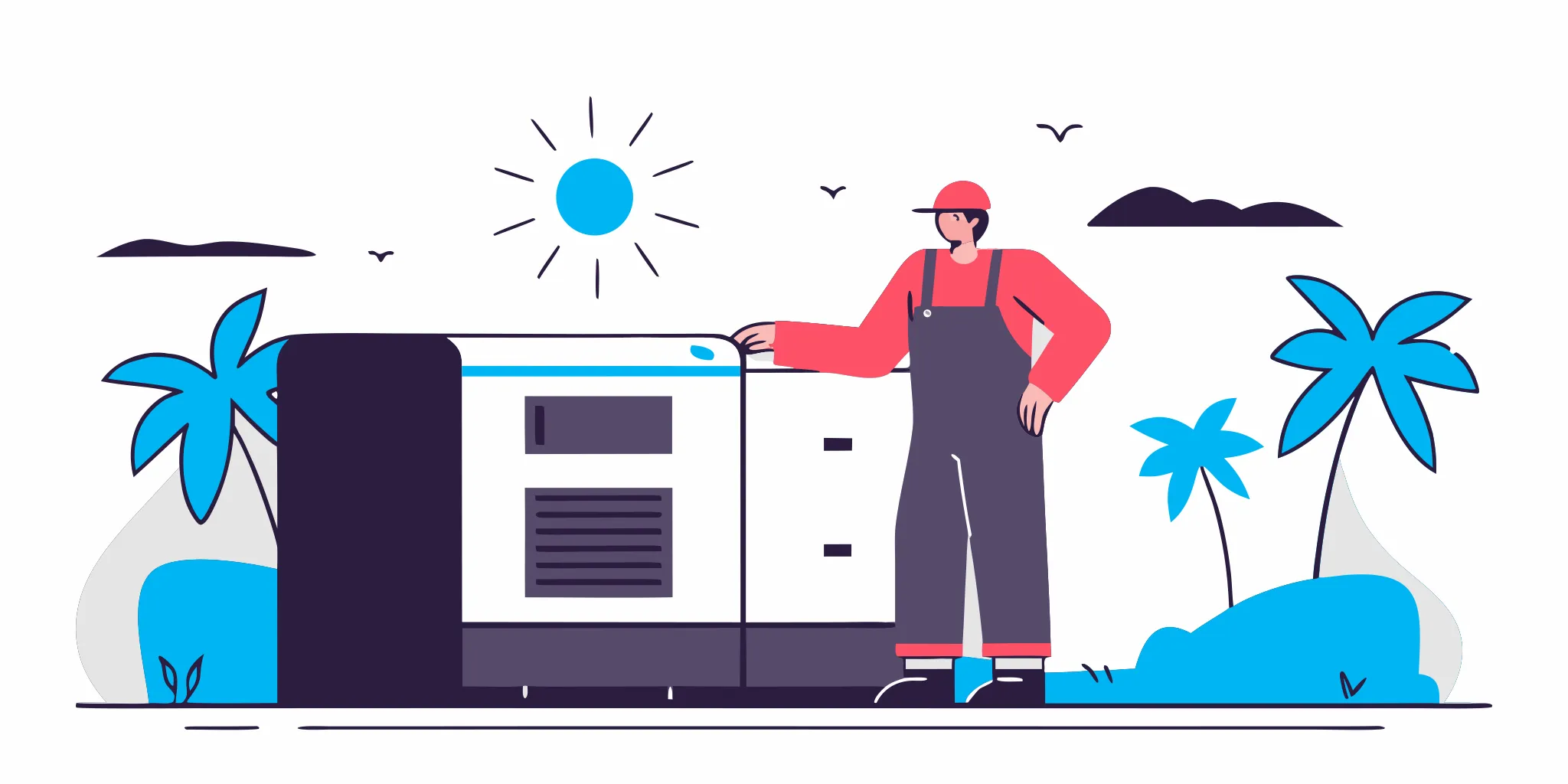
When a Florida storm knocks out power, the decision is not only about keeping the lights on. You may also need to protect refrigerated food, medical equipment, air conditioning, and sensitive electronics while roads, fuel supplies, and utility restoration remain uncertain. A backup system should match both your home's electrical demands and the way your household expects to manage an outage.
Schedule a generator consultation with a licensed electrician to review sizing, fuel options, transfer-switch safety, and hurricane-season readiness for your home.
The right home generator depends on which appliances must run, how long outages may last, your available fuel, and whether you want automatic or hands-on operation. Whole-house standby systems offer permanent installation and automatic startup, while portable units can cost less but require setup, safe placement, extension cords, and refueling.
Start by comparing those two approaches, then consider sizing, fuel, transfer-switch safety, permitting, and hurricane-season maintenance before choosing equipment.
Whole-House vs Portable Home Generator: Which Option Fits Your Home?
The right backup system depends on how much of your home you need to keep running. How often outages affect you, and how much hands-on work you can manage. A whole-house standby generator prioritizes seamless coverage and automation, while a portable unit can provide useful emergency power with a lower initial commitment.
| Feature | Whole-House Standby | Portable |
|---|---|---|
| Power coverage | Can support the whole electrical system or selected circuits through a connection to the panel. | Usually supports selected appliances or essential circuits based on its capacity and connection method. |
| Activation | Permanently installed and automatically turns on when utility power fails. | Requires manual setup, connection, starting, and shutdown during an outage. |
| Fuel and refueling | Typically uses natural gas or propane, reducing the need for manual refueling during an extended outage. | Requires fuel management and refueling while it runs. |
| Installation | Requires permanent placement, electrical connections, and professional installation. | Portable equipment still needs safe outdoor placement and a proper connection. Never connect it by backfeeding through a household outlet. |
| Upfront cost | Installed whole-house systems commonly range from $7,000 to $15,000. Standby equipment can start around $3,500 to $4,500 and reach $20,000 or more before project-specific factors. | Generally offers a lower initial cost, although the generator, fuel, cords, storage, and any required transfer equipment affect the total. |
| Noise and maintenance | Runs from a fixed outdoor location and needs scheduled maintenance so it is ready for storm season. | Can be loud, and maintenance, storage, setup, and fuel stabilizer become the homeowner's responsibility. Check HOA rules before purchasing. |
Choose standby power when your household needs uninterrupted support through multi-day outages, including dependable access to cooling, refrigeration, lighting, or medical equipment. The higher investment buys convenience, automatic operation, and less dependence on someone being home to start and refuel the unit. Exact costs vary with generator capacity, fuel connection, electrical work, permitting, and whether you want whole-home or partial-home coverage.
Choose portable power when budget is the first consideration and your needs are limited to a smaller group of essentials. You will need a safe operating plan and a reliable way to manage setup and refueling. My Electrician installs both whole-house and partial-home standby systems. Learn more about professional home generator installation or compare standby vs portable generator installation in Florida before deciding which approach fits your home.
How to Size a Home Generator for Your Florida Home
The right generator size depends on what you need to keep running, not simply the square footage of your house. A unit that is too small may trip breakers when several appliances start together. One that is larger than necessary can cost more to operate and waste fuel. Use these steps as a starting point, then have a licensed electrician verify the final capacity.
- List the equipment you must run during an outage. Start with the essentials your household cannot safely do without. Include medical devices, the refrigerator or freezer, basic lighting, a well pump if your home uses one, and air conditioning if cooling is a health or comfort priority. Put medical equipment and refrigeration at the top of the list. You can then decide whether items such as internet equipment, a garage door opener, or selected kitchen outlets belong in the backup load. This list helps you avoid paying for capacity dedicated to appliances you do not actually need during an outage.
- Add the running wattage, then account for startup wattage. Find the running-wattage information on each appliance label, owner manual, or manufacturer specification. Add the running wattage for every device you expect to use at the same time. Next, account for the temporary surge required when motors start. Refrigerators, well pumps, air conditioners, and similar equipment may need substantially more power at startup than while running. Correct sizing must handle both the combined running load and these startup demands. If several motor-driven appliances may start together, do not assume their startup needs will be irrelevant.
- Add 20 to 25 percent of headroom and confirm the electrical panel. Build a practical margin above your calculated load so normal variation does not leave the generator operating at its limit. A licensed electrician should complete a load calculation and assess whether your existing panel has the capacity for the planned generator connection. This panel-capacity check is separate from adding appliance wattages. If your panel is dated or struggling, review your electrical panel upgrade options before planning a generator connection. It confirms that the home's electrical equipment can support the integration safely and in accordance with applicable requirements.
As a broad reference point, smaller generator models provide at least 5,000 watts, which can cover essential circuits. While the largest models tested by Consumer Reports deliver upward of 15,000 watts, enough for an average home. These figures are not a substitute for a home-specific calculation. Your actual needs depend on the equipment you operate, its startup demand, and the capacity of your electrical system.
Home Generator Fuel Types: Natural Gas, Propane, and Diesel
In Florida, fuel availability is often the most practical concern after a hurricane. Roads may be difficult to travel, gas stations may have long lines, and deliveries can be delayed. The best fuel choice depends on how long you need backup power. Whether your property has an existing utility connection, and how much hands-on work you want during an outage.
Natural Gas: The Continuous-Supply Option
Many permanently installed standby generators run on natural gas or liquid propane. So you do not have to stop the generator and manually refuel it during an extended outage. For Florida homeowners with an available utility connection, natural gas can remove much of the refueling risk. Utility gas lines typically continue flowing after storms, although every home and outage situation is different.
Natural gas is especially convenient for households that want backup power to start automatically while residents remain focused on safety, cooling, food storage, or medical equipment. A qualified electrician should confirm that the existing gas service and electrical setup are appropriate for the generator you select.
Propane: Reliable and Long-Shelf-Life
Propane is another common choice for standby generators. It can be stored indefinitely with stabilizer, but the tank still needs enough capacity for the runtime you expect. A small tank may work for short interruptions but leave you searching for a refill during a multi-day storm recovery.
Before choosing propane, ask how much space is available for the tank and how refills are handled in your area. Planning for several days of operation is more useful than choosing a fuel system based only on the generator's size.
Gasoline and Diesel: Portable-Fuel Realities
Gasoline is common for portable generators, but it requires more preparation. Stored gasoline should be treated with fuel stabilizer, and it can be difficult to source after a major storm. Portable units also require manual setup, safe outdoor operation, extension cords, and refueling while the outage continues.
Diesel is typically associated with larger generator systems and commercial or high-demand applications. It can be a practical option where substantial fuel storage and planned maintenance are available, but it is not automatically the simplest choice for a typical Florida home. Consider not only the generator's output, but also how you will obtain, store, and safely manage its fuel before the next storm.
Why Your Home Generator Needs an Automatic Transfer Switch
What Backfeeding Is and Why It Is Dangerous
A transfer switch is not an optional convenience when a generator connects to your home wiring. It safely disconnects the home from the utility grid before generator power engages. That prevents backfeeding, which can send electricity into utility lines that workers may believe are de-energized. The result could be severe injury or death for utility crews, along with damage to electrical equipment. My Electrician explains the transfer switch as a critical safety component for generator connections.
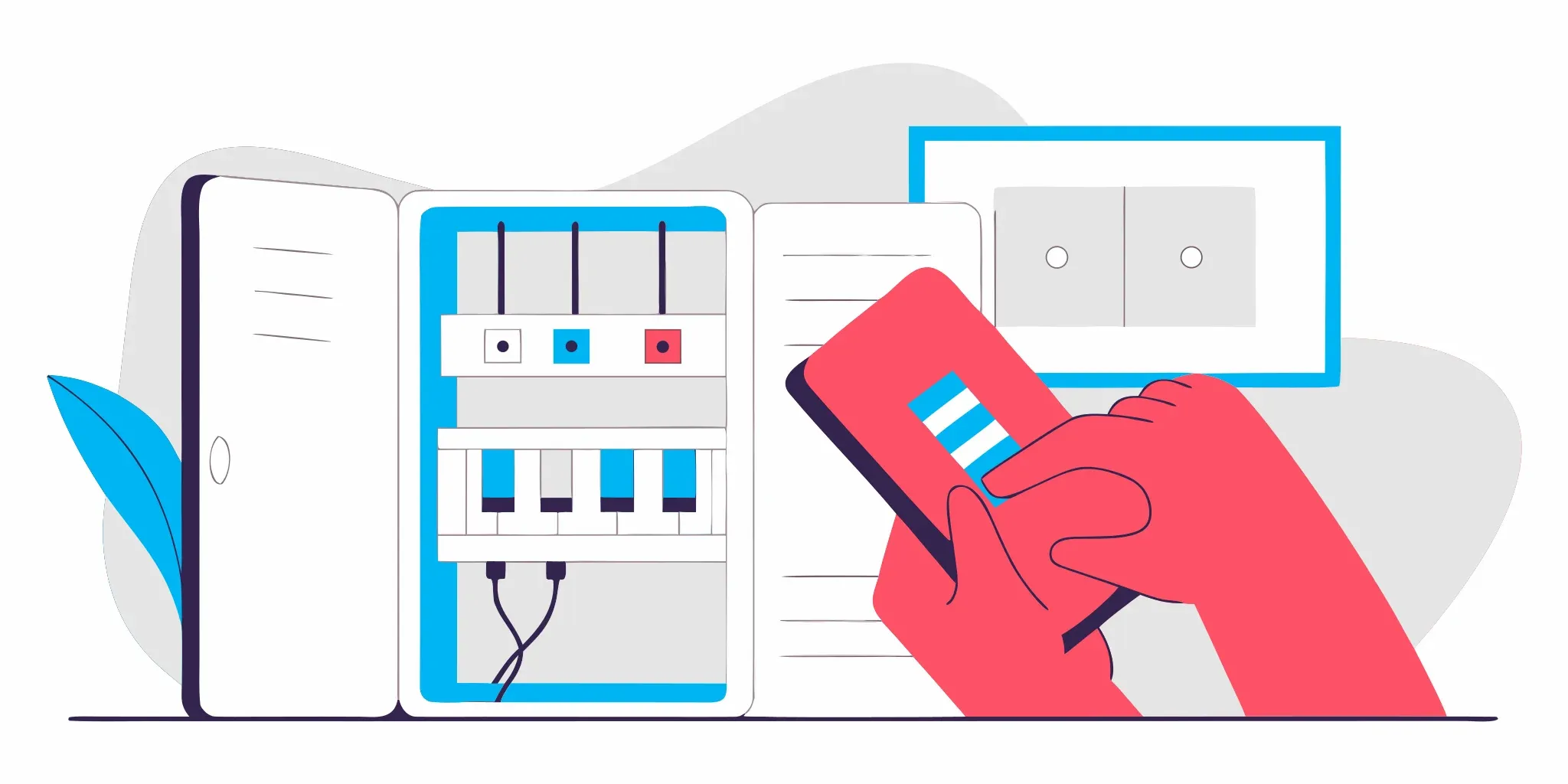
Without a properly installed transfer switch, connecting a portable generator directly to a household outlet can create an unsafe path for electricity. Never improvise this connection with a male-to-male cord or other workaround. The generator and the home's electrical system need to be connected through equipment designed for that purpose.
How an Automatic Transfer Switch Works
An automatic transfer switch, or ATS, continuously monitors utility power. When it detects an outage, it signals a standby generator to start and transfers the home's selected circuits or electrical service to generator power, usually within seconds. When utility power returns and stabilizes, the ATS switches the home back to the grid and allows the generator to shut down according to its control sequence.
This automatic process matters during a Florida outage because you do not need to go outside in heavy rain. Navigate a dark electrical panel, or manually move cables while trying to protect food, air conditioning, or medical equipment. The system must still be matched to the generator, service equipment, and circuits it is intended to supply.
Why Installation Requires a Licensed Electrician
Installing an ATS involves line-voltage connections and integration with the home's main electrical service. Certified expertise is necessary to complete that work safely, configure the equipment correctly, and verify grounding, bonding, and overcurrent protection. Professional generator installations should follow National Electrical Code requirements.
For a permanent standby installation in Florida, permitting and inspection are standard parts of the process. A licensed electrician can assess the electrical service, coordinate the permit, install the transfer equipment, and test the system before an outage occurs. ATS kits generally cost about $550 to $6,000 or more, depending on the equipment and application, before considering related installation work. Review current ATS cost context, then get a site-specific assessment rather than choosing equipment by price alone.
Installing a Home Generator in Florida: Permits, Placement, and Hurricane Readiness
A generator can provide welcome relief when an outage interrupts air conditioning, refrigeration, or essential medical equipment. However, safe and dependable backup power depends on more than choosing a unit. The installation location, electrical connections, permits, and storm-readiness plan all matter.
Permits and Inspections Are Non-Negotiable
A permanent standby generator installation requires permits and inspections so the work can meet local building codes. The electrician must also integrate the generator with your home's electrical system in accordance with National Electrical Code (NEC) standards. These steps help verify that the equipment, transfer equipment, wiring, grounding, and connections are installed safely rather than simply appearing to work during a test.
Permit requirements can vary by jurisdiction and installation details, so homeowners should ask who will obtain the permits and coordinate the inspection before work begins. A professional installation also includes evaluating whether the home's electrical panel can support the generator integration. That planning can prevent avoidable delays and reduce the risk of discovering a code or capacity problem after the equipment is delivered.
Placement and Clearance Keep Your Family Safe
Placement is a safety decision, not just a question of where the equipment looks best. Never operate a generator indoors or in a garage, and keep a portable generator at least 20 feet from windows, doors, and vents. Exhaust can contain carbon monoxide, an invisible and potentially deadly gas. Keep the unit dry, follow the manufacturer's instructions, and never bring it inside to protect it from rain.
A professional installer handles proper grounding, bonding, ventilation, and code-compliant placement for the equipment and fuel supply. For more guidance, review this resource on safe home generator placement before selecting an installation area.
Hurricane Season Is the Real Test
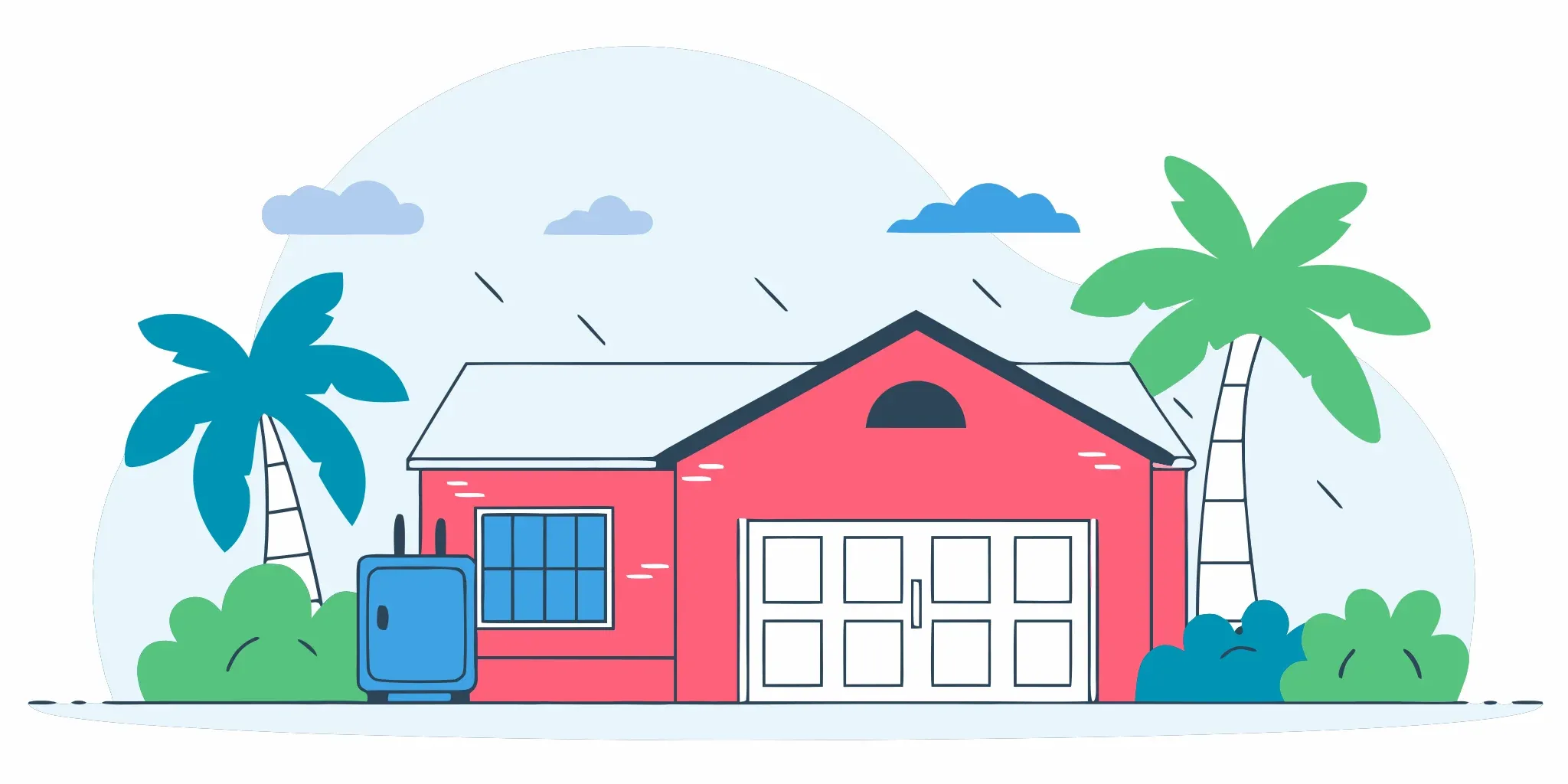
On the Treasure Coast, hurricane season can make reliable backup power a necessity rather than a luxury. Before a storm, confirm that the generator starts properly, the transfer system operates as intended, and the surrounding area is clear of debris. Storms can also deliver voltage spikes to whatever you protect, so consider whole-house surge protection for the equipment you rely on after the lights come back. Do not wait until a named storm is approaching to discover that maintenance or repairs are needed.
Whole-house surge protection is a valuable partner to generator power because storms and utility restoration can expose sensitive electronics to damaging surges. If an outage reveals an electrical problem or your generator will not start, My Electrician provides 24/7 emergency electrical service for urgent issues.
Home Generator Maintenance and Carbon Monoxide Safety
A generator is only useful during a storm if it starts when you need it and operates safely. Regular maintenance helps both portable and standby generators start reliably during hurricane season. It also gives you a chance to correct placement, fuel, and equipment problems before an outage creates pressure to improvise.
A Seasonal Maintenance Checklist Keeps Your Generator Storm-Ready
Schedule a maintenance check before the most active part of hurricane season, then follow the manufacturer's service intervals. Our generator maintenance tips for Florida homeowners walk through the seasonal checklist in detail. Refresh the oil as recommended, inspect the battery and connections on a standby unit, and test the generator under an appropriate load. Confirm that fuel lines, cords, connections, and the surrounding area are in good condition. For a portable unit that will be stored, add fuel stabilizer as directed so the fuel is less likely to degrade between uses.
Keep the owner's manual and maintenance records where you can find them quickly. If the generator has trouble starting, runs unevenly, or shuts down under load, stop using it until the cause is identified. A professional inspection can help confirm that the generator, transfer equipment, and electrical connections are ready for storm conditions.
Carbon Monoxide Rules That Can Save Lives
Carbon monoxide is odorless and can become deadly without warning. Never operate a portable generator inside a home, basement, or garage. Place it at least 20 feet from every window, door, and vent, with exhaust directed away from the home. Install a battery-powered or battery-backup CO detector inside the house. Headache, dizziness, weakness, nausea, vomiting, chest pain, and confusion can indicate CO poisoning. If these symptoms occur, move to fresh air and call 911.
For day-to-day electrical habits that reduce risk during storm season, see these Florida electrical safety tips, including surge protection and appliance guidance.
Review safe home generator placement before an outage, not while a storm is approaching.
Safe Portable Generator Habits
Use only extension cords rated for outdoor use, and keep the generator dry and away from rain, standing water, and other wet conditions. Never connect a portable generator to a wall outlet. Check your HOA rules before operating one, since some communities may restrict noise or generator use. These simple precautions protect your household and help prevent unsafe power from reaching utility lines or electrical equipment.
Frequently Asked Questions
What size generator is needed to power a house?
Start by listing the appliances, lights, medical devices, and other equipment you need to operate at the same time. Add their running wattage, then account for the higher startup wattage of motor-driven equipment such as air conditioners and refrigerators. A load calculation and electrical panel assessment can confirm whether the selected capacity will support your priorities safely.
What is the difference between a standby and portable generator?
A standby generator is permanently installed outside and starts automatically when utility power fails. A portable generator costs less upfront in many cases, but it requires manual setup, outdoor-rated extension cords, refueling, and careful placement during each outage. Your choice depends on whether you prioritize selected essential circuits or automatic, more comprehensive backup.
How do whole-house generators work?
A whole-house standby system connects to the electrical panel and typically uses natural gas or liquid propane. When utility power drops, the system detects the outage and transfers the home's selected electrical loads to generator power. This can help maintain critical equipment, refrigeration, lighting, and HVAC without manual startup.
Do I need an automatic transfer switch?
Yes, a transfer switch is required for a safe generator connection. It isolates the home from the utility grid before generator power is supplied, preventing dangerous backfeeding that could injure utility workers or damage equipment. Because the installation involves line-voltage connections, a qualified electrician should install and test the switch.
Which fuel types are available for home generators?
Common options include natural gas, liquid propane, diesel, and gasoline, depending on the generator and property. Natural gas and propane can support standby systems without manual refueling, while portable gasoline units require fuel storage and regular maintenance. If gasoline will be stored, use a fuel stabilizer and follow the manufacturer's storage instructions.
Ready to Schedule Generator Service?
The right generator setup can make hurricane-season planning simpler and help you prepare for dependable backup power. When you are ready to review your options, Schedule Service with My Electrician FL. Our team provides flat-rate upfront pricing and a 2-year written guarantee on parts and labor, so you can move forward with a clear plan for your home.