
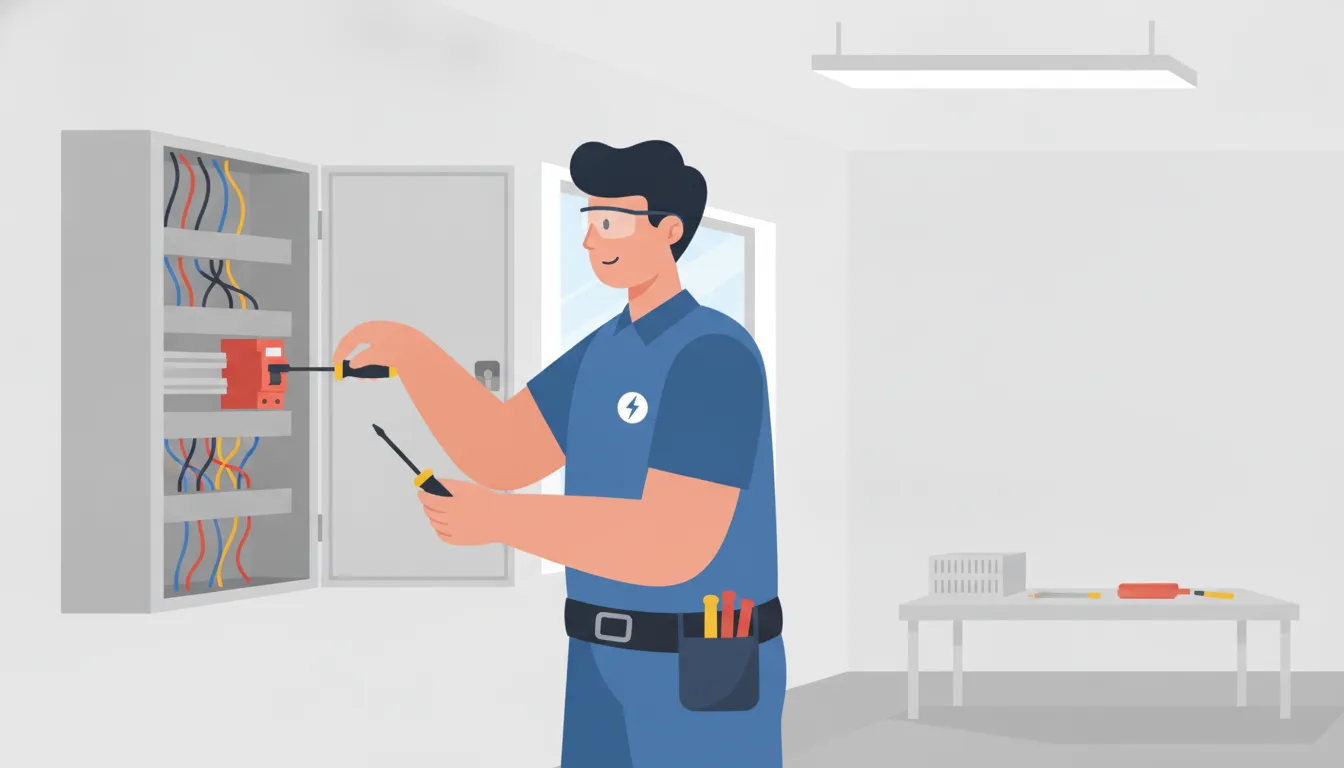
A breaker that trips whenever you use a new appliance is more than an inconvenience. It can signal that the appliance is sharing a circuit that does not have enough capacity for its electrical demand. A dedicated circuit is designed for one high-power appliance, helping reduce overload-related breaker trips.
To find an electrician to install dedicated circuit wiring safely, choose a qualified professional and verify the electrician is licensed, bonded, and insured. Ask how they will assess your electrical panel, size the circuit for the appliance, de-energize the equipment, and complete the work according to local codes.
You should also expect a clear explanation of the work, materials, and any inspection or access needs before installation begins. Knowing what a qualified electrician should evaluate makes it easier to compare estimates and recognize when a proposed solution addresses the underlying capacity issue rather than simply resetting the breaker.
Schedule Service Today: Call 877-762-7483 for Your Dedicated Circuit Installation
How to Find an Electrician to Install a Dedicated Circuit Safely
If an appliance keeps tripping its breaker, an outlet cannot keep up with what you plug into it. Or lights flicker when a high-power device starts, do not assume a larger breaker will solve the problem. Those symptoms can point to a circuit that is not suited to the appliance. Before hiring anyone, focus on finding a qualified professional who can determine whether a dedicated circuit is appropriate and install it safely.
Start by verifying that the contractor is licensed, bonded, and insured. These credentials do not replace careful questions, but they are an important first screen for professional workmanship and liability protection. Ask for the contractor's current business and insurance information, and confirm that the person evaluating the work is the same company you are hiring. Avoid relying on a verbal claim alone. Verify licensing, bonding, and insurance with the contractor directly, and ask how they will evaluate your electrical panel before quoting the work.
Ask how the electrician will evaluate your home
A reliable electrician should discuss the appliance, its location, the existing outlet, and your electrical panel before recommending a solution. Local electrical codes affect how wiring, protection, routing, and connections must be handled. Licensed contractors are familiar with the codes that apply in their service area. Which helps them plan work that is safe and compliant rather than treating every home as if it had the same layout.
Ask whether the electrician will assess the panel before quoting the installation. A new circuit must fit safely within the existing system, and the panel may not have the capacity or space needed for the proposed work. You can also ask what materials the job may require, such as a circuit breaker, junction box, connectors, fittings, and fasteners. Clear answers show that the contractor is evaluating the complete installation, not just adding an outlet.
Do not accept energized electrical work from an unqualified person
Electrical work is not a suitable do-it-yourself project when it involves the panel, new wiring, or energized equipment. The CDC and NIOSH state that only qualified persons should perform work on or near energized parts. Qualified workers have the training to identify hazards and use appropriate safety procedures: electrical safety guidance for qualified persons.
Dedicated circuit work can involve routing cable, making terminations, and working with junction boxes and connectors. That complexity demands licensed expertise. Choose an electrician who explains the scope in plain language, answers safety questions directly, and is willing to address code compliance and panel capacity. For help with a safe dedicated circuit installation, use the evaluation and hiring questions above before work begins.
Does That New Appliance Really Need Its Own Circuit?
If the microwave trips the breaker whenever the toaster is running, the garage refrigerator keeps kicking off the same breaker. Or you are planning an electric vehicle charger, the appliance may be asking for more capacity than its shared circuit can provide. These symptoms do not necessarily mean the appliance is defective. They can indicate that several high-demand devices are competing for one circuit.
A dedicated circuit is designed to power one high-power appliance or device. Separating that load helps prevent the overloads that commonly cause tripped breakers. If your breaker keeps tripping, an electrician can assess whether the problem is the appliance, the circuit, or the electrical panel before recommending a repair.
Which appliances commonly need dedicated power?
Large or high-demand equipment often needs its own line because modern appliances can exceed the capacity that an older shared circuit was designed to handle. Common examples include electric ranges, clothes dryers, air-conditioning equipment, water heaters, refrigerators in some locations, garage freezers, pool equipment, heat pumps, and EV chargers. The exact requirement depends on the appliance specifications, the installation location, and the home's existing electrical system.
An EV charger is a particularly clear example. Charging can draw substantial power for several hours, so connecting it to a circuit shared with garage outlets or other equipment may create recurring interruptions. A dedicated line gives the charger a properly planned supply instead of making the rest of the garage compete for the same capacity.
Why does the amperage matter?
Dedicated circuits are not all the same. A circuit may be rated at 15, 20, 30, 40, or 50 amps, but the correct rating must match the appliance and the wiring. Choosing a larger breaker simply because the appliance keeps tripping is not a safe fix. The conductor size, breaker, receptacle, disconnects, and appliance requirements must work together.
During an assessment, the electrician can review the appliance nameplate or installation instructions, inspect the panel, and determine whether space and capacity are available for the new circuit. If the panel cannot safely support the added load, the right solution may involve circuit breaker replacement or a broader electrical upgrade. That evaluation helps prevent repeated trips, overheating, and improvised connections.
| Appliance or equipment | Typical circuit type | Why a dedicated line can matter |
|---|---|---|
| Electric oven or range | 240-volt / higher amperage | High, sustained draw that can overload a shared line |
| Clothes dryer | 240-volt / higher amperage | Needs a large, dedicated supply to run safely |
| EV charger | 240-volt / 30-50 amp | Charges for hours and can disrupt shared garage outlets |
| Garage or basement freezer | 120-volt dedicated | A trip can quietly spoil contents before you notice |
| Standard receptacles and lights | Shared 15-20 amp | Usually fine sharing a circuit with similar loads |
Most dedicated jobs are planned around the exact appliance and the home's existing panel. The right answer is not always the highest amperage; it is the circuit that matches the equipment and the wiring. A qualified electrician should size the circuit to the appliance rather than simply fitting a larger breaker.
What to Look For and Ask Before You Hire
Choosing an electrician for a dedicated circuit is about more than comparing the first estimate you receive. You are hiring someone to connect a new circuit to your home's existing electrical system. So the contractor should be able to explain the work clearly and show that it will be handled responsibly.
Use this checklist during your search:
- Are you licensed, bonded, and insured? Ask for the contractor's current licensing information and proof of insurance. Bonding and liability coverage can provide additional protection if a problem occurs, while licensing helps confirm that the electrician has met applicable professional requirements. The importance of hiring qualified electrical professionals is also emphasized by the CDC's electrical safety guidance.
- Can you assess my electrical panel before giving me a final estimate? A professional should inspect the panel and determine whether the existing system has enough capacity for the new dedicated circuit. That assessment helps identify whether the circuit can be added safely and gives the contractor a basis for the estimate. Rather than relying on a guess from a phone call or a quick glance.
- Can you walk me through the estimate? Ask what is included in the labor, materials, permit or inspection costs, and any possible wall or ceiling access. Common installation materials can include a circuit breaker, junction boxes, connectors, fittings, and fasteners. An estimate should explain which of these items apply to your project and why.
- Will you pull a permit and follow local electrical code? Ask who handles the permit process, if one is required, and how the work will be inspected. Licensed contractors should be familiar with the electrical codes that apply in their service area. Clear answers here can help you avoid surprises after the installation.
- What warranty do you offer on the work? Confirm whether the warranty covers labor, parts, or both, how long coverage lasts, and what is excluded. Some professional providers advertise a one-year labor warranty on workmanship, but coverage varies, so get the terms in writing before work begins.
Be cautious if a contractor cannot provide documentation, dismisses questions about the panel, offers an estimate with no explanation, or pressures you to approve work immediately. A qualified electrician should be comfortable discussing the plan, the materials, the safety considerations, and the expected scope before you decide.
Keep the written estimate, warranty terms, permit details, and any panel recommendations with your project records. That information gives you a clear reference point and makes it easier to compare qualified electricians on the quality and completeness of their proposals. Not just the bottom-line price.
What the Dedicated Circuit Installation Process Involves
On the day of service, a qualified electrician should make the work area understandable and predictable. You can expect a conversation about the appliance or equipment, where it will be located. And symptoms you have noticed, such as a breaker that trips when the appliance runs. The electrician then evaluates the existing electrical system before deciding how the new circuit should be installed. You should not need to open the panel, handle wiring, or determine whether any part is energized. The CDC's electrical safety guidance states that only qualified persons should perform work on or near energized parts.
- The electrician assesses the panel and planned load. The first step is an inspection of the electrical panel and the proposed equipment location. The electrician determines whether the existing system has the capacity for a new dedicated circuit and identifies the appropriate route for the wiring. If the panel cannot safely support the addition, the electrician should explain the concern and discuss the available options before installation begins. This assessment helps prevent a new circuit from being added to a system that is already overextended.
- The work area and energy sources are made safe. Before opening equipment or beginning wiring work, the electrician follows proper energy control procedures and verifies de-energization. In practical terms, that means controlling the relevant power source and testing to confirm the work area is not energized. The homeowner should keep clear of the panel and work zone while this is happening. A professional handles any energized components and uses the training and safety procedures required for the job.
- The wiring path and circuit components are installed. The electrician installs the circuit conductors, breaker, outlet or connection point, and related fittings needed for the appliance. Depending on the home's layout, the work may include connector or junction box installation. Wiring complexity is one reason professional expertise matters, particularly when access is limited or the new circuit must travel through finished walls.
- The installation is checked for code and safety compliance. A professional process includes verifying that the work meets applicable local electrical codes and safety requirements. The electrician checks connections, confirms the circuit is appropriate for its intended equipment, and tests operation before considering the job complete. Licensed electrical contractors should be familiar with the requirements in their service area, but homeowners can still ask what inspections or approvals apply to their project.
- The area is restored and the homeowner receives a clear handoff. Access openings may require minor drywall repair after the wiring is complete, depending on how the circuit was routed. The electrician should explain what was installed, identify the new circuit, review safe operation, and answer questions about the equipment. If you need broader updates, such as professional house wiring services, ask before work begins so the scope is clear.
This sequence lets you know what to expect without putting safety decisions on your shoulders. A qualified professional should be able to explain each stage, protect the work area, and address concerns before the new circuit is placed in service.
How Much Does It Cost to Install a Dedicated Circuit?
Homeowners often want a realistic budget before they schedule an electrician, especially when a new appliance keeps tripping a breaker or the panel may need additional work. National cost guidance places dedicated circuit installation at about $700 on average, with a typical range of approximately $570 to $1,100. These figures are useful for planning, but they are not a guaranteed local price. Your final estimate depends on the home, the appliance, the circuit amperage, the distance from the panel, and the rates in your service area. Angi's cost overview provides the cited national range.
What is included in the estimate?
Labor usually makes up the majority of the bill. Installing a dedicated circuit may require routing new wiring, connecting the correct breaker, securing junction boxes or fittings, and testing the completed work. The electrician also needs to determine whether the existing panel can safely accept the additional load. A professional panel assessment is important because the least expensive-looking option is not always appropriate for the home's available capacity.
The appliance's electrical requirements also affect the price. A small circuit serving one type of equipment may require less work than a higher-amperage circuit with a longer wire run or more difficult access. Finished walls, crawl spaces, attics, and the location of the panel can all change the amount of labor involved. If wiring access requires limited wall opening, ask whether potential drywall repair is included or handled separately.
When can a panel upgrade add to the cost?
If the existing electrical panel lacks the capacity for a new dedicated circuit, an optional panel upgrade may be necessary. The cited national cost guidance places that additional work at roughly $1,200 to $2,000. It should not be assumed that every installation needs a panel replacement. A licensed electrician should inspect the panel, evaluate its condition and capacity, and explain why an upgrade is or is not recommended.
An electrical inspection may also be part of the project or required by local circumstances. Typical inspection costs are reported at approximately $100 to $400. Confirm whether that charge is included in the estimate, billed separately, or only applies when an inspection is needed.
How can you get a transparent price?
Choose a qualified electrician who will assess the panel and proposed appliance before giving a written estimate. Ask for the scope of work, amperage, materials, labor, inspection charges, and any possible panel or wall-repair costs to be explained clearly. An upfront, flat-rate pricing approach can make those expectations easier to understand before work begins. The right estimate should reflect your home's actual conditions, not simply promise the lowest number.
Red Flags When Choosing an Electrician for the Job
When you need a dedicated circuit, the person doing the work matters as much as the equipment you plan to use. Be cautious if someone treats the job like a quick add-on, dismisses your questions, or offers to begin before looking at the electrical panel. A dedicated circuit connects new wiring, overcurrent protection, and the existing electrical system. It should be planned and installed with safety and code compliance in mind.
They cannot show proof of qualifications
A reputable electrician should be able to explain the company's licensing and provide proof of insurance when you ask. Do not rely on a vague claim that someone is "experienced" or has done similar work. The CDC and NIOSH state that only qualified persons should perform electrical work on or near energized parts. Qualified workers have the training to distinguish exposed energized components from other parts of electrical equipment and to use appropriate safety procedures.
This is not a task for an unqualified handyman or a do-it-yourself experiment. Electrical injuries can include electrocution, shock, burns, and arc blast, and faulty electrical equipment or installations can contribute to fires. The CDC specifically advises that unqualified people should not work on energized parts and should stay 10 feet away from them. If a person cannot clearly explain how the work will be made safe, keep looking.
They discourage permits, inspections, or safe work practices
Be wary of anyone who says a permit or inspection is unnecessary simply because the circuit will be hidden behind a wall. Local requirements vary, and a qualified contractor should be willing to explain which approvals apply to your project. They should also describe how power will be controlled before work begins, rather than suggesting that energized wiring is acceptable for convenience.
Cutting corners can create problems that are expensive and dangerous to uncover later. A promise to "make it work" by using an unsuitable breaker, reusing questionable wiring, or skipping required protection is a reason to stop the conversation. If the existing panel has problems, ask whether circuit breaker replacement or another repair should be addressed before adding the new circuit.
They give a price without assessing the panel
A quote that arrives without an evaluation may leave out important work. The electrician should inspect the panel, consider its available capacity, discuss the appliance's requirements, and explain the route for the new wiring. Ask what the estimate includes, such as the breaker, wiring, connections, labor, permit or inspection fees, and possible wall access or repair. You do not need to choose the highest quote, but you should choose a clear scope from someone who takes the safety assessment seriously.
Ready to Schedule Service? Call 877-762-7483 and Confirm Your Dedicated Circuit Project
Frequently Asked Questions
How much does it cost to have an electrician install a dedicated circuit?
A dedicated circuit installation typically costs about $570 to $1,100, although the final price depends on the wiring path, panel capacity, materials, and local requirements. Labor usually makes up most of the total. A panel upgrade or inspection may add to the project cost. Review common dedicated circuit cost factors.
How do I find a licensed electrician for circuit installation?
Look for an electrician who can verify licensing, insurance, and relevant experience with panel work and dedicated circuits. Ask whether the estimate includes the circuit breaker, wiring, connections, permits, and any required inspection. A qualified professional should also assess your electrical panel before recommending the installation.
Can I install a dedicated circuit myself?
It is safer to hire a qualified electrician rather than work on the panel or energized equipment yourself. The CDC and NIOSH advise that only qualified persons perform electrical work on or near energized parts because mistakes can lead to shock, burns, or fire. See CDC electrical safety guidance.
Do I need a dedicated circuit for my appliance?
High-power appliances and equipment may need a circuit that serves only that device. If the appliance causes breakers to trip, lights to flicker, or other equipment to lose power. Ask an electrician to evaluate the circuit, appliance requirements, and available panel capacity before adding or changing wiring.
Ready to Schedule Service?
If you have found a licensed electrician for your dedicated circuit project, the next step is a clear conversation about your home's needs and the work involved. My Electrician FL can help you discuss the right service for your situation.
Schedule Service by Calling 877-762-7483
Ask your questions, share what you have noticed, and get guidance on moving forward safely.