
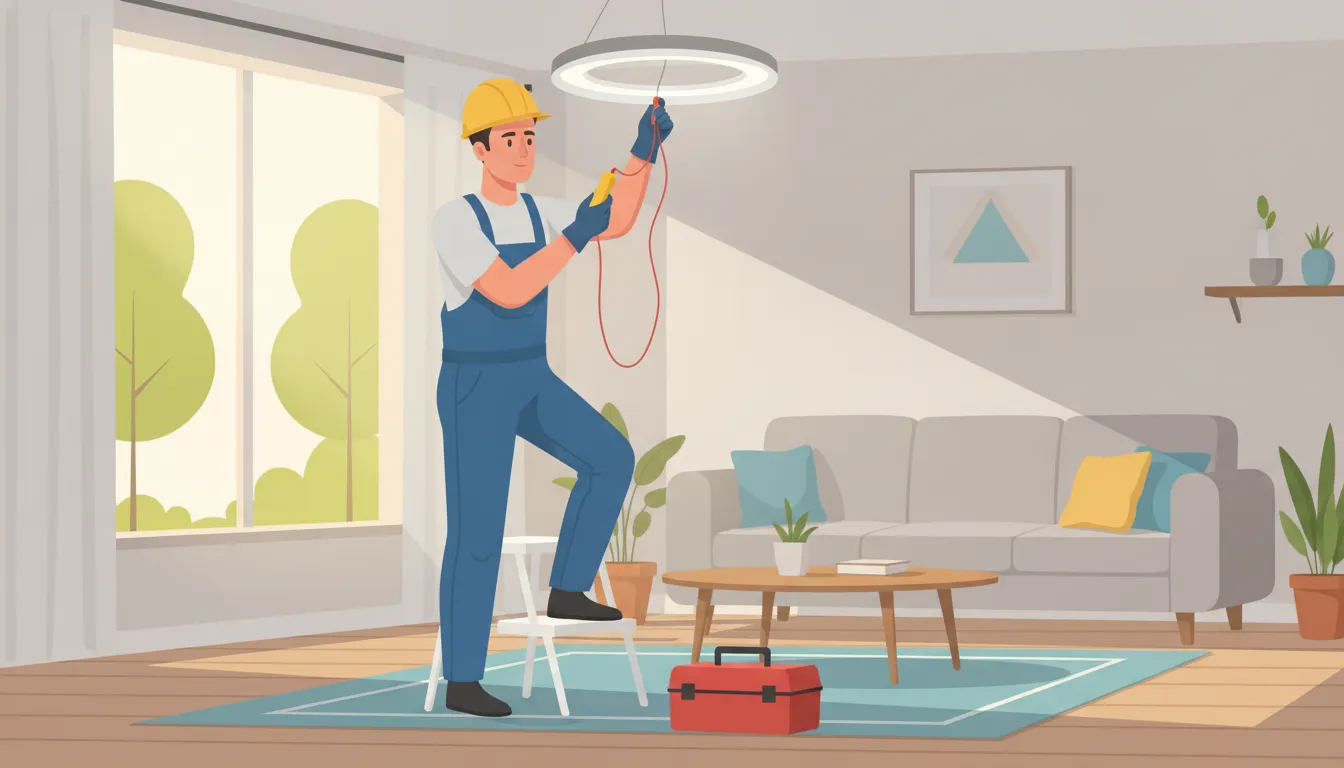
A light fixture that suddenly goes dark, flickers after a bulb change, or starts buzzing can be more than a minor inconvenience. These symptoms may come from the fixture, switch, wiring, or a related part of the electrical system. The safe solution is not always obvious from the wall switch.
When a light will not turn on, keeps flickering, or produces buzzing, a licensed electrician for light fixture repair can identify the problem and correct it safely. Prompt professional help is especially important if you notice a burning smell, heat, sparks, or flickering in multiple rooms. The National Institutes of Health reports that 48% of home electrical fires involve distribution equipment such as wiring, outlets, switches, lamps, bulbs, cords, or plugs: read the NIH fire-safety guidance.
For homeowners from Palm Beach Gardens through Vero Beach, the right next step is to notice exactly what the fixture is doing. Stop using it if it appears unsafe, and have a professional assess the warning signs before a small problem becomes a larger electrical hazard.
This guide walks through the fixture problems you may notice at home. It also covers the signs that point to electrical rather than cosmetic trouble, and the moments when professional help is the right call. Every symptom is described the way a homeowner experiences it, so you can explain the problem clearly and decide what to do next with confidence.
Schedule Service for light fixture repair with a licensed electrician in Port St. Lucie.
Fixture Repair Warning Signs in Your Home
Light fixtures often give you a clear signal when something is not working as it should. You may notice a dark room, hear an unfamiliar sound, or see a flash when you use a switch. These symptoms are worth taking seriously, especially when they continue after a simple bulb change. Common fixture concerns include lights that will not turn on, flickering, buzzing, and other problems that may require professional assistance.
The light will not turn on
A fixture that stays dark after you have checked the bulb and switch is a practical reason to schedule an inspection. The problem may affect the fixture itself, the nearby switch, or the circuit supplying it. You do not need to diagnose the issue from inside the wall. If the fixture remains inactive while other lights work normally, avoid repeatedly toggling the switch and arrange light fixture repair instead.
The light keeps flickering after a fresh bulb
Occasional flickering can be easy to dismiss, particularly when a bulb is nearing the end of its life. Persistent flickering after you install a fresh, properly rated bulb is different. It is a sign that the fixture needs a closer look. Flickering may also happen when you use the switch, turn on another appliance, or move through different brightness settings. Note when it occurs and whether it affects one fixture or several, then share those details with the electrician.
You hear buzzing or humming
A light fixture should not produce a persistent buzzing or humming sound during normal use. The noise may be faint at first, but it should not be ignored if it becomes louder. Changes when the light is dimmed, or continues after the bulb is replaced. Persistent buzzing is one of the warning signs that calls for professional attention. Turn the fixture off if you notice the sound, and do not remove the cover to investigate while power may still be present.
An outlet near the switch is dead
A nonworking outlet near a light switch can appear unrelated, but the two may be served by connected electrical components. A dead outlet, a switch that behaves inconsistently, or a fixture that works only sometimes can all point to a lighting repair concern. Do not force a plug into a loose outlet or keep resetting a device that will not operate normally. Describe what is working and what is not so the full area can be checked.
You see sparks when using the fixture
A visible spark from a switch, socket, or fixture is not a normal part of turning on a light. Stop using it and keep hands away from the fixture. If you notice smoke, a burning smell, or heat at the same time, treat the situation as urgent and contact an electrician for immediate guidance.
The fixture feels warm or hot
Warmth can be concerning when the fixture is hotter than usual, the heat is concentrated around the socket, or the fixture stays hot after being switched off. A hot fixture, unusual odor, discoloration, or melted-looking material should not be tested by touching it repeatedly. Switch it off if you can do so safely, keep flammable materials away, and request professional assistance.
Is It Safe to Fix a Light Fixture Yourself?
A simple light fixture swap can be reasonable for a careful homeowner when the existing wiring is accessible. The circuit is switched off at the breaker, and the new fixture is installed exactly according to the manufacturer's instructions. Turn the breaker off before removing the old fixture, verify that the power is actually off with an appropriate tester, and keep the work area dry. If you are not certain which breaker controls the fixture, stop rather than guessing.
A cosmetic fixture replacement is very different from troubleshooting a fixture that flickers, buzzes, sparks, or will not turn on. Those symptoms can point beyond the lamp or fixture itself. Faulty wiring accounts for approximately 25% of residential electrical issues, according to the Electrical Safety Foundation International (ESFI). Replacing visible hardware does not correct a loose connection, damaged cable, overloaded circuit, or another problem hidden in the electrical system.
When a DIY fixture swap may be reasonable
Consider a limited replacement only when the power can be positively disconnected, the electrical box is secure. The wires and wire connectors are intact, and the new fixture is compatible with the box and circuit. Follow the fixture instructions for grounding, mounting, bulb type, and weight. Do not attach a heavy item to a fixture or use a fixture as a support for something it was not designed to hold.
Never work on an open fixture or exposed wiring while it is energized. Do not rely on a wall switch alone, since someone could turn it back on while you are working. If the box moves, the receptacle or switch is loose, wire ends are exposed, or insulation is damaged, the project is no longer a straightforward swap.
Recognize hazards that require professional help
The CDC and NIOSH electrical safety checklist identifies exposed live parts in open light sockets. Unsecured electrical equipment, loose receptacle mountings, and broken or damaged receptacles as recognized hazards. It also calls for all splices, joints, and free wire ends to be covered with adequate insulation. Review the CDC NIOSH electrical safety checklist for the underlying safety guidance, but do not use a checklist as a substitute for an electrical inspection.
Call a licensed professional if the fixture is hot, smells burnt, shows scorch marks, trips the breaker, or continues flickering after a bulb change. Put safety first if several lights or rooms are affected, or if you see sparks or exposed conductors. In these situations, leave the circuit off and avoid opening the fixture. An electrician for light fixture repair can determine whether the fixture is the problem or whether the wiring, switch, box, or circuit needs attention.
When to Hire an Electrician for Light Fixture Repair
Some lighting problems are inconvenient. Others are warnings that should not wait. If changing a known-good bulb does not stop persistent flickering, arrange professional help rather than continuing to reset the switch or replace bulbs. A fixture that buzzes, will not turn off, or behaves unpredictably can have a problem beyond the bulb itself.
Call promptly for persistent flickering or buzzing
Flickering that continues after a bulb change may point to an issue with the fixture, switch, connection, or circuit. Buzzing is also a reason to stop treating the problem as a simple bulb replacement. Turn the light off if possible, keep children away from the fixture, and contact an electrician for light fixture repair who can inspect the equipment safely.
Do not keep using a fixture that refuses to shut off. Especially if the switch feels hot, the light cycles unexpectedly, or the problem is accompanied by a smell. Avoid opening the fixture or handling exposed wiring. Open light sockets that expose live parts are recognized electrical hazards, and splices or wire ends need adequate insulation. These are conditions better assessed by a qualified professional than guessed at from a ladder.
Burning smells, heat, or sparks require immediate action
A burning odor near a light fixture, visible smoke, unusual heat, scorch marks, or sparks is an emergency warning. Turn off power at the breaker only if you can do so without approaching smoke, fire, or damaged equipment. Leave the area and call emergency services if there is an active fire. Otherwise, request emergency electrical assistance and do not restore power until the cause has been evaluated.
Electrical safety deserves caution because lighting components are part of a home's electrical distribution system. The National Institutes of Health reports that almost half, or 48%. Of home electrical fires involve distribution equipment such as wiring, outlets, switches, lamps, light bulbs, cords, or plugs. A malfunctioning fixture does not automatically mean a fire is imminent, but burning smells, heat, and sparks should never be ignored. Read the NIH electrical fire-safety guidance for additional prevention information.
Flickering in multiple rooms is more urgent
When lights flicker across multiple rooms, the concern may extend beyond one fixture. Shut off sensitive electronics if practical, avoid repeatedly switching lights on and off, and seek help promptly. Multi-room flickering, particularly when paired with buzzing, heat, or a burning smell, should be treated as an emergency rather than a routine repair.
My Electrician provides 24/7 emergency service for urgent electrical problems. If you notice any of these warning signs in your home, prompt professional attention can help identify the source before the condition worsens.
Common Light Fixture Problems a Pro Can Fix
Light fixtures can fail in ways that are easy to notice but not always easy to diagnose. A licensed electrician can determine whether the repair involves a switch, socket, socket adapter, wiring, or the fixture itself. That matters because replacing a bulb will not correct a deeper electrical problem.
Flickering lights that keep returning
A fixture that flickers occasionally may have a loose bulb or a bulb that is not compatible with the fixture. If flickering continues after you replace or tighten the bulb, the cause may be in the socket, switch, connections, or wiring. Professional lighting repair commonly addresses persistent flickering and other fixture problems that do not respond to a simple bulb change. A technician can test the circuit and repair the faulty component instead of masking the symptom.
Lights that will not turn on
When a light remains dark with a known-good bulb, the problem may be a worn socket, a failed switch, a tripped breaker, or a disconnected wire. The surrounding symptoms help guide the inspection. For example, if other fixtures or outlets on the same circuit are also off, the issue may extend beyond the light itself. An electrician can safely isolate the fault and determine whether a socket, socket adapter, switch, or complete fixture replacement is appropriate.
Dead outlets near a switch or fixture
A dead outlet near a light switch can be frustrating, particularly when the outlet and fixture stopped working together. Professional lighting repair may include troubleshooting dead outlets and malfunctioning switches, not just changing the visible fixture. Testing can identify whether the outlet, switch, wiring, or circuit protection is responsible. Avoid repeatedly resetting a breaker if it trips again, since that pattern needs a proper evaluation.
Schedule Service to have an electrician inspect and repair your stubborn light fixture today.
Switches that feel loose or do not respond
A switch that feels loose, sticks, crackles, or fails to control the light should not be ignored. The repair may require replacing the switch, securing the electrical box, or correcting a connection behind the wall plate. A licensed professional can check the switch and the fixture together, helping prevent a new switch from being installed on an underlying wiring problem.
Buzzing, humming, or warm fixtures
Buzzing from a fixture can point to a failing socket, switch, ballast, connection, or incompatible component. Turn the light off and arrange professional help promptly if buzzing is persistent, the fixture feels unusually warm, or you notice a burning smell. These symptoms can signal a more urgent electrical problem rather than ordinary operating noise.
Loose, broken, indoor, and outdoor fixtures
A loose fixture can place strain on its box and wiring, while a cracked fixture may expose components to contact or moisture. Electricians can repair or replace residential and commercial fixtures, including indoor and outdoor lights. For exterior problems, outdoor light fixture repairs may address the fixture, connections, controls, or weather-related damage. When repair is not practical, a full fixture replacement can restore safe, dependable lighting.
What Can a Light Fixture Repair Visit Include?
When a light will not turn on, flickers, buzzes, or behaves differently after a bulb change. An electrician for light fixture repair should begin with the symptom you noticed. A professional visit is not just a quick bulb swap. It is a structured process that helps identify the problem, protect your home, and leave the fixture working safely.
Here is what a typical visit with My Electrician can include:
- Discussing the symptom and diagnosing the problem. The technician starts by asking what happened, when the issue began, and whether it affects one light, a switch, or other fixtures in the room. They may check whether the light is completely dead, flickers only at certain times, makes a buzzing sound, or trips a breaker. This symptom-first conversation helps focus the inspection instead of guessing from the fixture alone.
- Isolating power safely. Before opening the fixture, switch, or electrical box, the technician takes appropriate steps to isolate the power and verify that the work area is safe. Homeowners should not assume that turning off a wall switch makes every wire inside a fixture safe. Controlled power isolation gives the technician a safer starting point for the inspection.
- Inspecting the switch, wiring, box, and socket. The inspection can include the wall switch, visible wiring, connections, mounting box, socket, and fixture components. The technician looks for signs that help explain the symptom, such as damage, loose components, heat effects, or a connection that is not holding properly. If the fixture itself is not the source of the problem, the inspection can help identify whether another part of the circuit needs attention.
- Making the repair or replacing the fixture. Once the cause is clear, the technician explains the recommended work before proceeding. Depending on the condition of the equipment, that may mean repairing a connection, replacing a switch or socket, correcting a mounting issue, or installing a compatible replacement fixture. My Electrician uses transparent flat-rate pricing, so the homeowner can understand the price for the recommended work instead of trying to interpret an uncertain hourly estimate.
- Testing the completed work. After the repair or replacement, the technician restores power in a controlled manner and tests the light and its controls. They may operate the switch more than once and check for continued flickering, buzzing, or other unusual behavior. Testing matters because a light that turns on once is not necessarily a fixture that has been fully evaluated.
- Reviewing the result and cleaning the area. The technician explains what was done and answers questions about normal operation or follow-up needs. My Electrician technicians are direct employees, not subcontractors, and the company's work is backed by a 2-year warranty on parts and labor. They also do not leave a mess behind, so the work area should be returned in an orderly condition when the visit is complete.
A light fixture problem that includes a burning smell, visible damage, or flickering across multiple rooms deserves prompt attention. In those situations, stop using the affected fixture and ask a qualified professional how to proceed safely.
DIY or Professional: Which Is Right for You?
Some light fixture tasks are limited enough for a careful homeowner, while others can expose wiring, connections, or mounting problems that are not visible from the room. If the fixture simply needs a compatible bulb or a straightforward socket component replaced. A DIY repair may be reasonable when the power is switched off and the manufacturer's instructions are followed. Stop if anything looks damaged, loose, burned, or different from the instructions.
Choosing an electrician for light fixture repair is the safer path when the symptom suggests a circuit or wiring problem rather than a worn bulb. Faulty wiring accounts for approximately 25% of residential electrical issues, according to the Electrical Safety Foundation International. A licensed electrician can troubleshoot the fixture and its connections without asking you to work around exposed conductors or uncertain wiring.
| Approach | When it fits | When to avoid | Safety |
|---|---|---|---|
| DIY simple bulb or socket swap | One fixture has a compatible bulb or replaceable socket component, and the instructions are clear. | Do not proceed if the power cannot be positively turned off, the fixture is damaged, or the problem returns. | Turn off power first, follow the manufacturer's instructions, and keep hands away from exposed contacts. |
| Professional electrician | Wiring, connections, mounting, switches, or circuit behavior needs testing and repair. | Do not keep using the fixture when it buzzes, flickers in multiple rooms, or will not shut off. | A licensed professional can address live parts, insulation, secure boxes, and other hidden hazards. |
The CDC and NIOSH identify open light sockets with exposed live parts, unsecured electrical boxes, and improperly insulated splices or wire ends as recognized hazards. Those conditions are not good candidates for trial and error. A fixture that buzzes, repeatedly flickers, or refuses to turn on or off should be evaluated rather than repeatedly reset or rewired.
Call for professional help immediately if you notice a burning smell, smoke, heat, sparking, or flickering across multiple rooms. Turn off the affected circuit if you can do so safely, keep people away from the fixture, and contact a licensed electrician. When My Electrician performs the work, electrical repairs are backed by a 2-year warranty on parts and labor.
How to Choose an Electrician for Light Fixture Repair
When a light fixture will not turn on, keeps flickering, or makes an unusual sound, choosing the right electrician matters as much as getting the light working again. Look for a professional who can address the visible problem safely, inspect related wiring when needed, and explain the recommended repair in language you can understand. The best electrician for light fixture repair should make safety, communication, and workmanship clear from the first call.
Verify licensing, insurance, and experience
Ask whether the electrician is licensed and insured before scheduling work. Licensing helps confirm that the technician has the qualifications required for electrical repairs, while insurance helps protect you and the contractor if an accident or property damage occurs. You can also ask how often the company handles the type of fixture involved. Whether it is a ceiling light, recessed lighting, a chandelier, exterior lighting, or a fixture connected to a wall switch.
A qualified professional should be comfortable explaining what will be inspected and why. Avoid anyone who immediately recommends replacing several components without first asking about the symptoms, checking the fixture, or discussing the scope of work. A clear explanation is especially important when a simple bulb change has not resolved persistent flickering or when more than one light is affected.
Ask who will perform the work
Find out whether technicians are employed directly by the company or sent through a subcontractor. Directly employed technicians can provide a more consistent service experience and make it easier for the company to stand behind its training and workmanship. My Electrician states that its technicians are direct employees rather than subcontractors, which gives homeowners a straightforward answer about who may arrive at the property.
Prompt response is another practical selection criterion. A dead light in one room may be inconvenient, but buzzing, a burning smell, or flickering across multiple rooms can signal a more urgent concern. In those situations, look for a company that offers emergency response instead of waiting several days for an appointment.
Compare pricing, warranty, and reputation
Before work begins, request a clear explanation of the price and what it includes. Transparent flat-rate pricing can help you understand the expected cost without guessing how each small task will affect the final bill. Be cautious of vague estimates, pressure to approve unrelated work, or a quote that changes substantially without a clear explanation.
Ask about the warranty on both parts and labor. My Electrician backs its electrical work with a 2-year warranty on parts and labor. Also check the company's local reputation through recent reviews, paying attention to comments about arrival times, communication, cleanup, and whether the repair lasted. Homeowners in the region can review about us information and explore electrician services before making contact. My Electrician serves communities from Palm Beach Gardens through Vero Beach, so local homeowners can ask whether their address falls within the service area.
Frequently Asked Questions
How much does an electrician cost to fix a light fixture?
The cost depends on the fixture, the symptoms, and whether the problem involves the switch, wiring, mounting box, or another part of the circuit. A professional should inspect the issue before quoting the repair. Ask for transparent, flat-rate pricing so you understand the recommended work before it begins.
How much does it cost to have a light fixture rewired?
Rewiring costs vary based on how much wiring needs attention and whether the fixture or electrical box also needs repair. Exposed wire ends, damaged insulation, loose connections, or an unsecured box should be handled by a qualified electrician rather than covered up or left in place. An on-site evaluation provides the most accurate scope.
How much do electricians charge to change a light switch?
A switch replacement may be straightforward, but the right service depends on what caused the switch to fail. If the switch is warm, buzzing, sparking, loose, or connected to a fixture that flickers, the electrician should troubleshoot the circuit instead of simply installing another switch. Request the repair details and price before approving the work.
Can a non-electrician change a light fixture?
Some homeowners may replace a simple fixture, but electrical work becomes unsafe when live parts are exposed, wire connections are uncertain, or the mounting box is loose. Turn off power and stop if you see burning, buzzing, damaged wiring, or persistent flickering. A licensed electrician can safely assess the fixture and the wiring behind it.
Ready to Schedule Light Fixture Repair?
Persistent flickering, buzzing, or a fixture that will not turn on can make it difficult to know whether the problem is simple or needs professional attention. A qualified electrician can help identify the issue and recommend a safe next step.
Call 877-762-7483 to Schedule Service for light fixture repair.