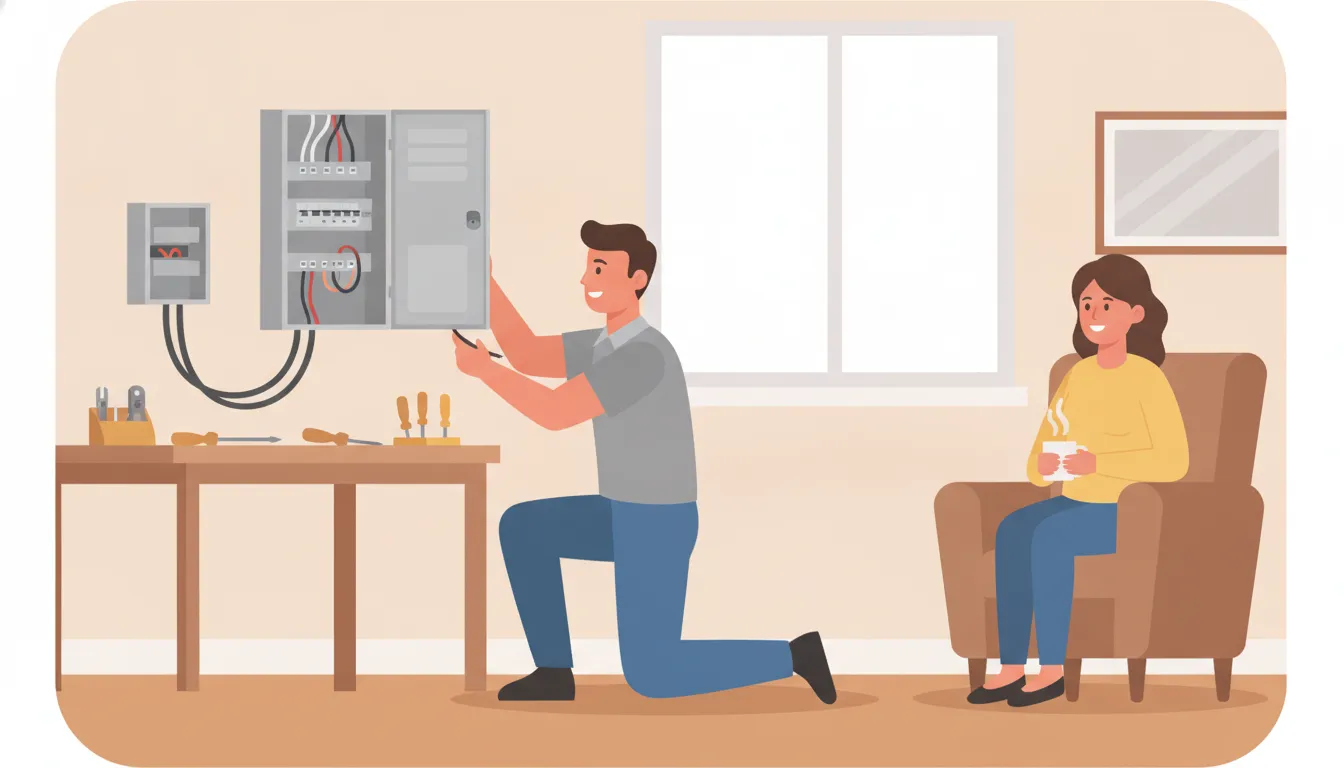
Your kitchen breaker trips every time you run the microwave and toaster at the same time. This common safety issue happens when shared wires overload from heavy power demands.
A dedicated circuit installation gives a single high capacity electrical line that runs straight from your main breaker box to just one heavy appliance in your Florida home. This reliable and modern electrical setup ensures that your high power household devices do not overload your system, trip your circuit breakers, or cause dangerous fire hazards. Heavy electrical devices like kitchen fridges, microwave ovens, clothes dryers, heating systems, and electric cars need these separate wires to work safely and meet local building codes. According to safety rules published by IAEI Magazine, these separate lines prevent dangerous power surges and also protect your home and expensive kitchen devices from costly electrical damage.
To keep your family safe, you must know how your home system handles heavy power loads. This guide will help you find which appliances need their own lines and how to upgrade. To start your journey, the path begins with What Is a Dedicated Circuit?
Schedule dedicated circuit installation for your Florida home today
What Is a Dedicated Circuit?
Many homeowners do not think about how power moves through their walls. They only notice their power when a breaker trips. When you plug in a heavy appliance, it needs its own space to draw power safely. This setup is called a dedicated circuit, and it plays a key role in keeping your home safe from electrical fires.
The Single Appliance Concept
A dedicated circuit installation sets up an electrical pathway made for only one appliance. By design, this circuit serves just one piece of equipment. This means no other things can plug into this line. The wire runs straight from your main electrical box to the single outlet.
This design protects your costly assets, since high-power machines need a steady flow of power. If they share a wire, the voltage can drop when the machine starts. This drop can damage computers, fridge motors, and other costly tools. A separate line keeps the power smooth and steady.
Differences from Shared Circuits
Most of the outlets in your home use shared circuits. A single breaker in your panel might power all the lights and plugs in your living room. When you turn on a lamp, a TV, and a vacuum, they all draw power from that same line. This is fine for small things that do not use much current.
But problems start when you plug in a big appliance. If you put a microwave on a shared line, it can draw too much power at once. This will trip the breaker and shut down everything in the room. A dedicated line solves this by keeping the big appliance separate.
Safety with Dedicated Lines
Safety is the main reason to use these circuits, as big machines can draw more current than a thin wire can handle. Dedicated circuits prevent overloads by making sure high-wattage appliances do not exceed the circuit's limit. Without these lines, wires can get too hot. Over time, hot wires can melt their plastic covers and start a fire in your walls.
Proper grounding is another key safety step when we run new wires to make sure they are safe. Under safety rules from the Centers for Disease Control and Prevention, all AC premises wiring systems must have an identified conductor grounded. Grounding gives stray power a safe path to the earth instead of passing through your body. This lowers the risk of shock when you touch a metal appliance.
Using dedicated lines is a smart choice for many reasons:
- Fire safety: They prevent hot wires by spreading the electrical load.
- Device care: They protect your costly gear from power drops.
- Less downtime: Your breakers will not trip during normal daily use.
Which Appliances Need a Dedicated Circuit?
Many heavy appliances in your home need a lot of power to run safely. Plugging these large units into a shared circuit can cause frequent power losses and trip your breakers. To keep your home safe and protect your costly electronics, you should invest in dedicated circuit installation. This keeps each high-power device on its own line, which stops other outlets from losing power.
Kitchen appliances
You will find many of the heavy devices in your kitchen. Experienced trade guides show that large units like refrigerators and microwaves need dedicated circuits to work in a safe way. A refrigerator runs day and night to keep your food cold. If it shares a line with a toaster, the sudden power draw can trip the breaker and cause your food to spoil.
Other kitchen appliances also need their own lines. For example, your dishwasher and your electric range or wall oven use a lot of heating power. These high-voltage appliances pull heavy electrical currents when they are turned on. Putting them on separate lines protects your wiring from getting too hot and reduces the risk of home fires.
Laundry and utility systems
In the laundry room, both the clothes dryer and the washing machine are heavy users of power. A washing machine uses a motor to spin and clean your clothes, which draws a lot of current. The dryer uses a large heating element that needs even more energy. Both devices must have their own lines to prevent overloading the panel.
Other key utility equipment in your home also needs a single dedicated line. Your sump pump, for instance, must run during major storms to prevent basement flooding. If it shares a line with a garage door opener or workshop tools, the breaker might trip at the worst possible time. An HVAC system is also a massive energy draw that needs its own high-amp circuit.
High-load specialty equipment
Today, modern homes feature advanced devices that need special electrical setups. An electric vehicle charger is a prime example of high-load equipment. According to a safety checklist from the CDC, your circuit breaker must be sized at least 125% of the charger load. As an example, a 40-amp Level 2 charger needs a dedicated 50-amp circuit to run without risk.
To help you find which devices need their own lines, we have listed common home appliances. We also show the safety reasons why they must not share circuits.
| Appliance | Why it needs a dedicated circuit |
|---|---|
| Refrigerator and Freezer | Prevents food spoilage by avoiding sudden circuit trips from other devices. |
| Microwave Oven | Pulls high wattage in quick bursts that can overload a shared line. |
| HVAC System | Draws massive electrical current to run the compressor and fan motors. |
| Electric Vehicle Charger | Pulls a high, steady electrical current that exceeds standard household outlets. |
| Sump Pump | Ensures continuous power during heavy storms when basement flooding is a risk. |
| Clothes Dryer | Uses high-voltage heating elements that pull more power than regular circuits can give. |
Signs Your Home May Need a Dedicated Circuit
Our homes show clear signs when they struggle with daily power needs. When you plug in an appliance, you might see small signs of strain. These everyday issues show that your current setup cannot handle the load safely. A new dedicated circuit installation protects your gear and keeps your home safe.
Tripped breakers and dimming lights
Do your lights dim or flicker when the fridge or AC kicks on? This symptom happens when a large appliance demands a sudden gulp of power. If that appliance shares a line with your lights, the power drops for a moment. This drop causes your light bulbs to lose their brightness. You should not have to choose between keeping your food cold and having bright lights.
Another common warning sign is a circuit breaker that keeps tripping. If your breaker shuts off power when you run a microwave, the line is full. The trip is a safety feature that stops wire fires. But constant resets mean you need a new power path. You can solve this strain by calling for electrical panel services to split your heavy loads.
Hot outlets and buzzing sounds
Have you ever touched an outlet or a switch plate and felt that it was warm? Outlets should always stay cool to the touch. If they feel hot, the wires behind the wall carry too much power. This heat is a major warning sign. Wires that carry too much power can melt or burn. You might also hear a faint buzzing or clicking sound when you plug in a device.
These symptoms are urgent warnings of a major electrical fire hazard. Safety checklists from the Centers for Disease Control and Prevention show that poor wiring causes home hazards. If you notice hot or noisy outlets, turn off the breaker immediately. Contact an electrician to find and fix the issue.
Overused extension cords
Many older homes were built before the rise of modern devices. If you rely on extension cords to run your devices, your outlets are likely full. Plugging multiple heavy items into one wall plug draws too much power. This can wear down your wires over time.
Extension cords are only for short use. They are not a safe way to power heavy gear for a long time. Running long cords across your floor also creates tripping and fire risks. Heavy appliances like space heaters and window units must plug directly into a wall. If you lack the outlets to do this, your home needs a new power path to stay safe.
How Much Does Dedicated Circuit Installation Cost?
Many homeowners want to know the price of a new line before they start. The truth is that there is no single price for a dedicated circuit installation. The total cost will depend on several distinct factors in your home. This is why we are open and use an upfront flat-rate system with no surprise fees.
Key factors that affect your price
Several main details will shape the final price of your project. The first is the total distance from your main breaker box to the new outlet. Running a long wire through finished walls takes more time and labor. If our team must open drywall, that will also add to the final amount.
You must also think about local permit fees. Most towns need a permit for new electrical wiring to make sure everything is safe. We handle the permits for you so you do not have to worry. These costs are always added to the job outline up front.
Electrical panel capacity and upgrades
Your home panel must have enough space and power for the new line. If your panel is full, you might need a panel upgrade before we can add the circuit. Old panels often fail to support heavy loads like dryers or electric car chargers. Sizing the panel right is key to keeping your home safe from fire.
When you add a heavy load, safety rules are strict. Safety checklists from the Centers for Disease Control and Prevention show that breakers must be sized right. For a constant load, the breaker must handle at least 125 percent of the load.
This means a forty amp charger needs a fifty amp circuit breaker. If your system cannot support this draw, we must upgrade the panel first. This extra step will increase your overall price but it keeps your family safe.
Our upfront flat-rate pricing
We do not want our customers to face surprise costs. That is why we use an upfront flat-rate pricing system for every job we do. When our expert electricians visit your home, they will inspect your current panel and the outlet site. They will find the exact path for the new wire and check for wall access.
After this check, we give you a clear quote before any work starts. This quote shows the full cost of the job with no hidden fees later. You will know the exact cost before we turn a single screw. If you are ready to get a safe line, please contact us for a flat-rate price.
How a Dedicated Circuit Is Installed
Adding a new circuit to your home is a precise task. It requires careful planning, technical skill, and clear knowledge of local building codes. While some homeowners might think about doing this themselves, a dedicated circuit installation is always a job for a licensed pro. Doing so ensures your home stays safe from electrical fires and shock hazards. It also ensures your heavy appliances get a steady flow of power.
Pre-installation check
Before any real work begins, a licensed electrician must perform a thorough check of your home's current power needs. They will inspect your current electrical panel services to see if there is enough space for a new breaker. The electrician will also work out the total load of the new appliance to ensure your service can handle the extra demand without overloading. They must choose the right breaker size and wire gauge. For example, a heavy stove needs a thicker wire and a larger breaker than a small bedroom outlet. Planning these loads ahead of time prevents code issues and future power cuts.
The step-by-step process
Once the plan is ready, the real installation can start. This involves running new wiring and setting up the new circuit. The electrician must route the wire through your walls, attic, or crawlspaces to reach the final spot. They use special tools to fish the cable without causing major damage to your drywall. Here are the main steps a licensed expert follows during the work.
- Turn off the main power at the panel to create a safe work area before touching any live parts.
- Run a new wire of the correct size from the electrical panel to the room where the new appliance will go.
- Mount a sturdy metal or plastic outlet box in the wall to hold the new outlet securely.
- Install a new dedicated circuit breaker into an open slot in the main service panel.
- Wire the new outlet or connect the line directly to the appliance box if it needs a direct link.
- Ground the system so the wiring follows safety codes and reduces the risk of shock.
- Test the connection by turning the power back on and checking the voltage with a meter.
Post-installation safety checks
After the physical steps are done, the electrician performs final safety checks. These tests ensure the new dedicated line operates at peak safety. During the work, the tech must ground the wire to meet national codes. This follows the electrical safety rules from CDC NIOSH. This step protects your costly devices and keeps your home safe from sudden power surges. The pro will also label the new breaker in your panel. This makes it easy for you to find and control in the future.
Safety and Code Considerations for Dedicated Circuits
Every home electrical system must follow strict safety rules. These rules protect your home from fires and shock risks. When you plan a new appliance setup, you must think about the National Electrical Code, or NEC. This code sets the path for safe wiring, wire sizing, and panel setups.
National electrical code standards
The NEC has specific guidelines for how appliances hook up to your electrical panel. Some large units need their own line rather than sharing power with other outlets. You can read about these appliance connections to understand branch circuit rules. If you do not follow them, you risk a dangerous system overload.
Some kitchen appliances have specific plug rules. A refrigerator, for instance, often needs a single outlet on its own line. Industry experts at IAEI Magazine explain how a single receptacle keeps your food safe and stops power trips. This setup ensures that heavy appliance motors do not share paths with smaller items.
Breaker sizing for steady loads
Correct breaker sizing is a core safety step for any dedicated circuit installation. If you install an electric vehicle charger, you must follow the continuous load rule. The NEC defines a continuous load as any draw that lasts for three hours or more. Under these rules, your circuit breaker must be sized at 125% of the total load or more.
Safety checklists from the CDC and NIOSH show that a charger needs this extra safety margin. As a clear example, a 40-amp Level 2 charger needs a dedicated 50-amp electrical circuit breaker. This extra space stops the wire from getting too hot during long charges. Sizing the breaker correctly keeps your system safe and reliable for years.
Grounding and local permits
Every new dedicated line also needs proper grounding. The CDC guides state that all AC wiring systems must have an identified conductor grounded. Grounding gives stray electrical current a safe path to the earth. Without it, a short circuit could send high voltage through your appliance body and cause a bad shock.
Lastly, local Florida rules call for a permit for new circuit work. Homeowners in Port St. Lucie through the Palm Beaches must get a permit for this work. A licensed electrician knows how to file the paperwork and schedule local inspections. These permits prove that your new wiring meets all safety standards and keeps your home insurance valid.
Why Professional Dedicated Circuit Installation Matters
Trying a DIY dedicated circuit installation can lead to severe safety hazards like electrical fires or shocks. Adding heavy power loads to your home is a job that must be done right. Hiring a licensed electrician ensures your new wiring is safe, up to code, and ready to handle the load.
Load calculations and code compliance
Licensed electricians start by doing exact electrical load checks. This step is key because overloading a circuit can damage your appliances or trip your breaker. For instance, charging an electric car has strict safety rules. According to the CDC EV charger safety guide, a charger circuit breaker must be sized at least 125% of the charger load. As an example, a 40-amp Level 2 charger needs a dedicated 50-amp circuit to run safely.
Expert installation also ensures you follow local building codes. Your city requires permits and inspections for major electrical work. A licensed team knows these local rules and handles the paperwork for you. Skipping these steps can lead to costly fines and failed safety tests later on. This formal process protects your home value and keeps your insurance valid.
Protecting expensive home electronics
Modern homes are packed with costly tech. High-power appliances like HVAC units, fridges, and pool pumps can cause power surges when they start up. If they share a line with other devices, those surges can fry sensitive gear. A dedicated line isolates the heavy load. This simple shield keeps your smart TVs, computers, and tablets safe from sudden voltage spikes.
Poor wiring can also degrade over time. Loose wires or incorrect wire sizes can heat up, which wastes energy and poses a fire hazard. Expert installation ensures that every wire, outlet, and breaker matches the exact draw of the devices. This careful work prevents hot spots in your walls and extends the lifespan of your appliances.
The My Electrician difference
When you choose My Electrician, you get elite service from local experts. Our pros are full-time employees, not random subcontractors. Every team member has over ten years in the field and follows the National Electrical Code strictly. We are so confident in our work that we provide a two-year written guarantee on parts and labor.
We also believe in clear terms. We offer flat-rate, upfront pricing so you never face surprise fees. Plus, we are here for you around the clock with our 24/7/365 emergency electrical service. Our team is always ready to help when you need us most. Learn more About My Electrician and see how we put your safety first.
Call (877) 762-7483 to schedule your dedicated circuit installation
Frequently Asked Questions
Does a fridge need a dedicated circuit?
Yes. A fridge should have its own dedicated circuit. This prevents the line from overloading when the motor starts up. If you share the circuit with other devices, the breaker may trip and spoil your food. According to the IAEI Magazine, using a single outlet for a fridge is a common way to keep things safe and reliable.
How is a breaker sized for an EV charger?
An electric vehicle charger needs a lot of power. Because of this, the breaker must be sized at least 125% of the charger load. As an example, a 40-amp Level 2 charger needs a dedicated 50-amp electric circuit. According to the CDC and NIOSH, this proper sizing is needed to keep the wiring safe from heat and fire risks.
Can you run two appliances on one dedicated circuit?
No. A dedicated circuit is designed to serve only one specific appliance. According to My Electrician, plugging two heavy devices into the same line will overload the circuit. The breaker will trip and shut off the power to protect your home. For safety, each high-wattage device needs its own separate run back to the panel.
How do you know if you need a dedicated circuit?
You may need one if your lights flicker when you turn on a device like a microwave or dryer. Breakers that trip often are another common sign. If you notice warm outlets, burning smells, or have to use extension cords for major appliances, your lines are overloaded. These are clear symptoms that you need to install new lines for safety.
Are You Ready to Protect Your Home with a Dedicated Circuit?
Ignoring overloaded circuits in your home risks sudden power surges, fried appliance motors, and dangerous electrical fires that can damage your valuable household items. By setting up dedicated circuits today, you prevent these serious hazards and ensure your household devices run without any interruption. Do not wait until a breaker trips or a wire melts when our prompt team is ready to help you upgrade your panel today.
Ready to protect your home? Call (877) 762-7483 today to schedule service for your dedicated circuit installation. Our friendly team of licensed local electricians is always ready to make sure your electrical work is completed safely, quickly, and correctly.