
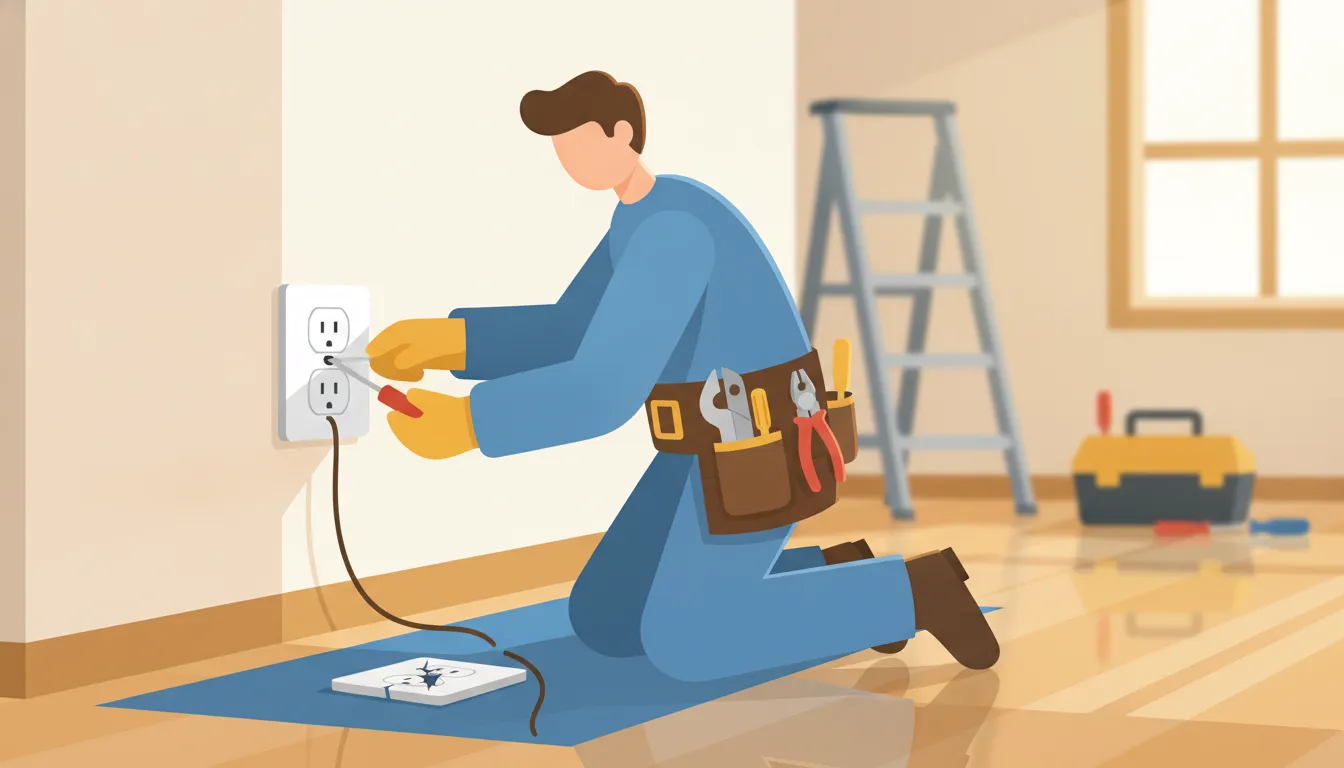
Loose plugs that slide out of your electrical outlet can spark a house fire. This warning sign means the metal contacts inside the receptacle have worn down and must be replaced.
The cost to replace an electrical outlet usually ranges from $150 to $350. The national average is near $200 for a standard plug installed by a licensed electrician. According to cost guides from Angi, this price includes about $10 to $40 for materials. The rest goes toward local professional labor. Standard duplex plugs are the least costly to swap. Upgrading to safety-focused ground-fault circuit interrupter (GFCI) outlets usually runs between $90 and $200 each to protect your family against electrical shocks. Electricians often charge a minimum service fee of $100 to $200 to cover travel and testing. Because of this base service fee, it is highly cost-effective to replace multiple worn outlets during a single professional visit to keep your home safe.
Ready to fix that loose or worn outlet? Schedule a free quote for outlet replacement
While the upfront price is straightforward, several factors like outlet type and your home's wiring can change your final bill. To help you budget, we will address these details in our first section, What Does It Cost to Replace an Electrical Outlet? The answer begins with:
What Does It Cost to Replace an Electrical Outlet?
When you plan to upgrade your home wiring, knowing the price of a small job is helpful. The standard cost to replace an electrical outlet ranges from $150 to $350 per unit. Most people spend around $200 for a single job based on national data. If you have many units to replace at one time, the price per outlet often drops.
Average Price Ranges
Rates can vary from place to place. Some cost guides show a range of $80 to $200 for parts and labor. A national building index puts the usual rate between $276 and $334 as of mid-2026. If you need a brand-new outlet run to a new spot, the price can go from $200 to over $500.
Labor Costs and Service Fees
Most of what you pay for this task goes toward skilled labor. Electricians charge between $50 and $130 per hour. Even if a job takes only ten minutes, most pros charge a set fee to cover their travel. This callout fee is often $100 to $200.
Labor rates can also change based on several job details. Some of these details include:
- How easy it is to reach the outlet box
- Whether the pro needs to run new wires
- The age of your home electrical system
- Any drywall repairs needed after the job
When you hire a pro, you do not just pay for a quick swap. You pay for their tools, training, and a promise of safe work. A licensed team will test the circuit after they finish to make sure it runs well. This step prevents future issues and protects your family.
Material Costs by Outlet Type
The type of outlet you choose also affects the final price of the job. Standard 120-volt outlets are cheap, costing only $1 to $7. Smart outlets or units with built-in USB ports are more costly, running from $20 to $50. If you need to add safety parts, the costs will change.
Ground-fault circuit interrupters, or GFCIs, are key safety parts that cost about $12 to $40 at local hardware stores. Having an expert put one in often costs between $90 and $200 in total. These devices monitor power flow and shut down the circuit in milliseconds if they find a ground leak. The Consumer Product Safety Commission notes that these devices protect your family from shock and electrocution.
Some older homes built before 1973 do not have modern safety outlets. You can upgrade these systems by replacing old outlets with GFCI units to boost home safety. This upgrade is a smart choice that keeps your home in line with current safety codes. It also ensures your appliances get stable power without risking damage.
Signs a Homeowner Should Replace an Electrical Outlet
Many homeowners do not think about their electrical outlets until they stop working. But old or worn outlets can cause major problems in your home. It is best to spot the early warning signs of failure before a fire starts or someone gets hurt.
Physical damage and loose plugs
Look closely at the outlets in your rooms to find cracks or dark marks on the plastic. Loose plugs are also a common symptom that shows the metal contacts inside have worn down. This wear creates high electrical resistance and generates dangerous heat. You should learn about the signs an electrical outlet needs replacement to keep your home safe. Regular visual checks can help you find these problems early.
Watch for these physical signs:
- Cracks or chips in the plastic plate
- Plugs that fall out of the slot easily
- Dark soot or brown burn marks on the face
Burning smells and buzzing sounds
A healthy outlet should never make noise or smell bad. If you hear a soft buzzing or popping sound, turn off the breaker right away because of loose wiring. Electricity can jump across these loose wires, which can melt the plastic. You must also watch for warm plates or burning odors that show you need professional help. Do not wait for the outlet to stop working completely.
Tripped breakers and flickering lights
Do your lights flicker when you plug a device into a specific outlet? You might also find that your circuit breaker trips every time you use a certain plug. Damaged outlets often create short circuits that cause your breakers to trip unexpectedly. This is a clear sign that the outlet needs a replacement before a fire starts. Prompt repairs protect your appliances from sudden power surges too.
Fixing bad electrical parts quickly is needed to keep your home safe and prevent fires. Some people try to do this work on their own to save money. But DIY electrical work is very risky. Badly installed outlets are a main cause of home fires, so you should always hire a licensed pro. Experienced technicians can find hidden circuit hazards before they turn into major hazards.
Upgrading your outlets is a great way to boost safety. For instance, ground-fault circuit interrupters shut off power in milliseconds if current leaks. You can read safety data from the U.S. Consumer Product Safety Commission to see how these devices protect your family from shocks. These safety upgrades are vital for wet areas like kitchens and bathrooms.
What Factors Change the Price of Outlet Replacement?
Many details can change the total cost to replace an electrical outlet. Some jobs are quick and cheap, but others need more time and work. An electrician will check a few items to find the final price.
The type of outlet and its features
The outlet type and features you choose will change the price. A basic 120-volt plug costs very little. But a ground-fault circuit interrupter (GFCI) is a special safety device. These units cost more because they track power and shut it off to protect you from shocks.
Amps and special plugs also play a role. A 20-amp outlet needs heavier wire than a 15-amp unit. Also, many rooms now need tamper-resistant plugs with safety shields. Other upgrades, like USB ports, will also raise your cost.
Plugs with USB ports or smart features are handy. They let you charge phones or control lights from your phone. But these smart plugs are more complex and cost more to buy. An electrician can help you plan where to install them.
Project scope and job access
The number of plugs you swap at one time changes the price per unit. Changing three to six outlets often costs between 270 dollars and 1,200 dollars. A whole-home project with many outlets can cost up to 4,250 dollars. Doing many plugs at once often saves you money on the service call.
Where the plug sits is also a key factor. Hard-to-reach spots, like behind heavy appliances, need more labor time. If the electrician finds bad wiring, they must run new lines. New wiring costs about seven to ten dollars per foot, and cutting drywall can add 50 to 400 dollars.
House age and regional weather
Older homes often need extra work. If your home was built before 1973, it might not have grounded circuits. In these cases, you can upgrade your system by placing receptacle-type GFCIs in the old outlet boxes. This safety upgrade, backed by the U.S. Consumer Product Safety Commission, protects your home from fires and shocks.
A professional electrician can check your grounding. If your system is old, they will make sure it is safe. For other safety issues, you can book licensed electrical repair services. They will test your circuits to ensure your home meets current safety codes.
Local weather also affects how long your outlets last. Florida's high heat and humidity can stress electrical parts. Damp air speeds up wear in garages and outdoor areas. If your outdoor plugs fail, you must replace them with heavy-duty outdoor units to prevent short circuits.
Is It Worth Paying a Professional vs Doing It Yourself?
Some homeowners look for ways to cut the cost to replace an electrical outlet by doing the work themselves. But while swapping a plug seems easy, working with live power is dangerous. Small mistakes can lead to big hazards, so it is often better to hire an expert. Paying for a pro helps protect your home and gives you peace of mind.
The Hidden Risks of DIY Projects
Working on your own outlets poses grave safety risks, as badly installed plugs are a main cause of home electrical fires. Without the right training, you can cause a short circuit or get a severe shock. You also cannot verify if the circuit is properly grounded. A pro will check this grounding to protect your home from sudden surges and shocks.
Older homes have even more risks, as many homes built before 1973 still use old wires. You can upgrade these older systems with GFCI plugs, a safety move supported by the Consumer Product Safety Commission. But if your home has old knob-and-tube wiring, a DIY swap is not safe.
Trained pros have the skills to handle these old systems safely. They can upgrade your old outlets to make sure your home stays safe. This simple step protects your family from hidden fire hazards.
The Value of Licensed Service
Hiring a pro gives you more than just a working plug, as licensed experts can find and fix deep electrical issues. If your circuit has too much load, a simple outlet swap will not solve the issue. Pros will find these hidden faults right away. They can also provide licensed electrical repair services to keep all your appliances running smoothly.
A licensed pro also ensures the work is safe and correct by testing the circuit after the job is done. This key step shows that the power flows safely. Best of all, pros give a guarantee of quality and compliance. My Electrician FL gives a full two-year warranty on parts and labor to give you lasting peace of mind.
Meeting Electrical Codes
All home electrical work must follow strict rules under the National Electrical Code. If your DIY work does not meet these codes, you may face fines and have trouble selling your house. Electricians make sure every new plug aligns with current safety laws. This keeps your home safe, compliant, and up to code.
| Factor | Do It Yourself | Licensed Electrician |
|---|---|---|
| Safety risk | Shock and fire risk from bad wiring | Trained to work with live power safely |
| Circuit grounding | Unable to verify grounding | Checks and confirms grounding |
| Code compliance | May fail the National Electrical Code | Matches current safety codes |
| Underlying faults | Rarely finds root cause | Diagnoses overloaded circuits or bad wiring |
| Warranty | None | Two-year warranty on parts and labor |
Why a Licensed Electrician Matters for Your Home
Safe outlets are the foundation of a secure home power grid. You must keep them in good shape to protect your house from fire and shock. When you look at the cost to replace an electrical outlet, you are not just buying a new faceplate. Upgrading your outlets with licensed electrical repair services is a smart investment in your home's long-term safety and functionality. It ensures that your household appliances get steady, reliable power.
National Electrical Code and safety standards
A licensed pro makes sure all new installs match local rules. All electrical work must align with the current National Electrical Code to ensure safety. The Consumer Product Safety Commission notes that GFCI protection is required for receptacles in bathrooms, basements, and garages. These devices monitor the circuit and shut down the power in milliseconds if current leaks to ground. Hiring an expert ensures that your home stays fully compliant with these rules.
Professional diagnosis and part warranties
When an outlet fails, the issue is often deeper than a cracked plug. A licensed professional can diagnose underlying electrical issues that might be causing outlet failures, such as overloaded circuits or faulty wiring. They do not just swap the parts; they find the root cause. This helps prevent fire hazards and stops future issues. Plus, professional work comes with a warranty that includes a guarantee of quality and compliance with safety standards. This gives you long-term peace of mind.
Upfront flat rates and safety testing
When you choose a pro for your electrical services, you get clear pricing before the work starts. You will get a clear, flat-rate quote upfront so there are no surprise fees. The technicians who do the work are direct employees, not random sub-contractors. This means you can trust the skills of the person entering your home.
Once they finish the swap, they run thorough tests on the circuit. This makes sure that your new outlet is operating safely. If a major issue happens late at night, you can access 24/7 emergency electrical services to address immediate safety concerns. A dedicated support team is always ready to assist you.
How Much Does It Cost to Install New or 220-Volt Outlets?
When you want to add a plug where none exists, the task is larger than a simple swap. If you only need to swap an existing plug, the cost to replace an electrical outlet is much lower than running a fresh line. A new location requires cutting drywall and running new wire from your electrical panel.
Costs for a New Outlet Location
A standard outlet replacement often ranges from $150 to $350. But placing a brand-new 120-volt outlet in a fresh spot is a larger task. Professional guides show this work can cost between $500 and $1,000. The price depends on the distance from your panel and how hard it is to run wire through the walls.
For outdoor spots or garages, you must use safety plugs. The Consumer Product Safety Commission (CPSC) reports that a ground-fault circuit interrupter (GFCI) protects you from electric shocks. These devices monitor current in a circuit and shut down power in milliseconds if they find a leak. Wet air in Florida can stress your electrical system. This safety protection is vital in damp spots where the risk of shock is higher.
The Expense of 220-Volt Circuits
Heavy home appliances cannot run on standard 120-volt lines. Instead, they need separate 220-volt or 240-volt circuits. Adding a 220-volt plug costs more because it needs a separate breaker and heavy gauge copper wire. These jobs often run from $300 to $800 depending on the length of the wire run.
An electrician must mount a new double-pole breaker in your electrical panel for a 220-volt outlet. This work is complex and needs expert skills to protect your household appliances. Trying to install these high-voltage lines on your own can lead to severe shocks or electrical fires.
Most large home systems and devices need this extra power. You will need to budget for a 220-volt line for these items:
- Electric clothes dryers and cooking ranges
- Large central heating and cooling systems
- Home vehicle charging stations
- Large workshop tools and air compressors
Want to know exactly what your outlet replacement will cost? Call (877) 762-7483 to schedule a free quote
Frequently Asked Questions
How much should an electrician charge to replace an outlet?
Typically, a licensed electrician will charge about $150 to $350 to replace a standard electrical outlet. According to a cost guide by Angi, the price often centers near $200. This fee covers both labor and parts. Most experts charge a minimum service fee of $100 to $200 just to visit your home. If you replace several outlets at once, the cost per outlet goes down.
Do I need an electrician to replace an outlet?
Yes, you should always hire a licensed electrician to replace your outlets. While some homeowners try to do this as a DIY project, improper wiring poses major safety risks. A bad connection can easily cause an electrical shock or start a house fire. Licensed experts understand local safety codes and the National Electrical Code. You can book safe, licensed electrical repair services to ensure your new outlets work correctly.
How much is it to install a 220 volt outlet?
Installing a 220-volt outlet typically costs between $150 and $500 if the wiring is already in place. However, if you need a brand-new dedicated circuit run from your electrical panel, the total cost can range from $300 to $800 or more. The final price depends on the length of the wire run and any panel upgrades. Because of the high voltage, this task requires a licensed professional to ensure safety and code compliance.
How much does it cost to install a new electrical outlet?
According to a cost guide by Paschal, installing a brand-new electrical outlet usually costs between $500 and $1,000. This is higher than a simple swap because the job requires running new wires from the electrical panel through your walls. The total price depends on wall access, the distance to your main panel, and if you need drywall repairs afterward.
Ready to schedule your outlet replacement?
Ignoring warm, cracked, or flickering outlets can lead to serious home hazards like sudden electrical fires, painful shocks, and damage to your expensive home devices. Choosing our professional outlet replacement service today protects your family, ensures steady power, and keeps your entire electrical system up to modern safety standards. Our licensed, local electricians are ready to visit your home today and update your electrical system using our clear, flat-rate pricing with no hidden fees.
Ready to schedule? Call (877) 762-7483 to schedule a free quote for outlet replacement. Our friendly staff is ready to help you set up a convenient service time with our local team. Contact us today to secure your home and get your electrical system working perfectly again.