
After a Florida storm, a television that will not turn on or several unresponsive chargers can be more than bad luck. A brief voltage spike may last less than a second, yet still damage sensitive electronics. Modern homes contain more of those circuits than ever, from smart appliances to HVAC controls.
For many homeowners, the best whole house surge protector for home is a panel-mounted device installed by a licensed electrician. It provides the first line of defense by stopping or diverting surges before they travel through your home's circuits, although sensitive equipment may still benefit from point-of-use protection. NIST explains that surges can come from lightning, utility activity, and appliances inside the home.
That makes surge protection worth evaluating before the next storm, especially if your home includes expensive electronics, an EV charger, or other equipment you depend on daily. The first step is understanding which parts of your electrical system and household equipment a whole-house protector can actually shield.
Schedule a whole-house surge protector installation with a licensed electrician to get a panel-mounted solution matched to your electrical system and grounded for Florida conditions.
What Does a Whole House Surge Protector Protect?
If your television stops working after a storm, your appliances keep resetting, or several electronics fail at once, an electrical surge may be part of the problem. Damage does not always follow a dramatic lightning strike. A surge is a brief, intense spike in voltage that may last only a fraction of a second, yet still damage sensitive electronic components. Modern homes contain more electronic circuitry than older homes, from smart appliances and televisions to computers, HVAC controls, garage door openers, and home security systems.
A whole-house surge protector helps protect these connected systems by addressing the surge at the electrical panel. Installed directly at the panel, it is designed to stop or redirect excess electrical energy before it travels through the home's branch circuits. That makes it the first line of defense for the equipment connected throughout your home, rather than protection limited to one outlet or one device. The National Institute of Standards and Technology explains how whole-house protection helps protect appliances from surges.
Which appliances and electronics can it help shield?
Panel-mounted surge protection can help reduce the risk of surge damage to many types of household equipment, including:
- Televisions, computers, gaming systems, and home office equipment
- Refrigerators, washing machines, and other appliances with electronic controls
- Air-conditioning and heating equipment with sensitive control boards
- Garage door openers, security systems, smart-home devices, and internet equipment
- Lighting controls, chargers, and other electronics connected to the home's wiring
Surges can come from outside the home, including lightning and utility grid activity. They can also begin inside the home when major appliances turn on or off. Motor-driven equipment such as HVAC systems, refrigerators, and washing machines can create internal electrical disturbances. Because these sources are not limited to severe weather, whole-house protection can provide useful everyday defense as well as added protection during storm season.
Does it replace power strips?
No. Whole-house protection and point-of-use protection serve different roles. A panel-mounted device provides broad, first-line coverage for the home's circuits. A quality surge strip can add another layer for especially sensitive equipment, such as a computer, television, or home entertainment system. NIST recommends using point-of-use surge protection for sensitive electronics as part of more complete coverage.
Proper installation matters. A whole-house surge protector connects to the home's electrical system and should be installed by a licensed professional electrician who can confirm panel compatibility, wiring, and grounding. It is not a plug-in device that should be selected and wired as a do-it-yourself project.
Is a Whole House Surge Protector Worth It for Your Home?
If a storm leaves your television, refrigerator controls, or smart-home equipment unresponsive, the repair or replacement bill can quickly outweigh the cost of prevention. A whole-house surge protector is often a sensible value because it helps address electrical spikes at the panel before they travel through the home's circuits. The exact value depends on your home's equipment, electrical system, and installation requirements, but the decision is not limited to protecting one outlet or one device.
Surges can come from outside the home, including lightning and utility activity, but they can also begin inside. According to the National Institute of Standards and Technology, major motor-driven appliances such as HVAC systems, refrigerators, and washing machines create internal surges when they turn on and off. These internal events make up a large share of surges, so protection is useful even on a clear day.
What makes the investment worthwhile?
Modern homes contain more sensitive electronics than older homes. In addition to computers and televisions, many households rely on appliance control boards, security systems, garage-door openers, networking equipment, EV chargers, and smart thermostats. A brief voltage spike may last only a fraction of a second, yet still damage sensitive components. Replacing several devices, diagnosing hidden damage, or losing access to an essential appliance can be far more disruptive than arranging protection in advance.
Installation costs vary with the surge protective device, panel configuration, grounding, accessibility, and any electrical corrections a licensed electrician identifies. Treat any online price as a general estimate, not a promise. In many homes, the installation is comparatively modest when weighed against the possible cost of replacing multiple electronics or repairing appliance control boards. A professional can also explain whether your panel needs attention first, including whether electrical panel upgrades should be considered.
Is whole-house protection enough by itself?
It is best viewed as the first line of defense, not a guarantee that every connected device will be unaffected. NIST recommends combining whole-house protection with point-of-use surge strips for especially sensitive electronics. A panel-mounted device helps reduce surges across the home's circuits. While a quality strip can add another layer where a computer, television, or other delicate equipment is plugged in.
For most homeowners with modern electronics, valuable appliances, or frequent storm concerns, whole-house protection is a practical safety investment. Have a licensed electrician evaluate the panel and grounding so the device is selected and installed for your actual system.
How to Choose the Best Whole House Surge Protector for Home
When a storm leaves a television dead or a garage door opener suddenly stops responding, the right surge protector can help prevent a repeat. Choosing the best whole house surge protector for home means matching the device to your electrical system, not simply selecting the largest number on a product box. A licensed electrician can confirm those details before installation.
Compare the joule rating
A surge protector's energy-handling capacity is commonly measured in joules. In general, a higher joule rating indicates that the device can absorb or divert more surge energy before its protective components wear out. This is useful when comparing otherwise similar products, especially in a home with sensitive electronics, HVAC equipment, smart devices, or an EV charger. However, joules are only one part of the decision. A high rating does not make an incompatible device safe or suitable for every panel. NIST explains how surge ratings and whole-house protection work.
Understand Type 1 and Type 2 SPDs
Type 1 and Type 2 refer to where a surge protective device is installed and how it connects to the electrical system. Type 1 devices are generally installed on the supply side of the main service equipment. While Type 2 devices are commonly installed on the load side, often at or near the home's service panel. The correct choice depends on the home's service arrangement and the electrician's design. The important point for a homeowner is that a panel-mounted SPD is positioned to help divert excess voltage before it travels through branch circuits. Surge protective devices redirect excess voltage into the grounding system rather than allowing it to reach connected appliances.
Check listing, ratings, and panel compatibility
Look for a product with a recognized safety listing, such as UL listing, and review its voltage, short-circuit current, and system configuration ratings. Those details should match the home's electrical service. A 200-amp panel may have different requirements from a 100-amp panel, and the available breaker space. Panel brand, bus configuration, and service type can all affect which SPD is appropriate. Some protectors use a dedicated two-pole breaker, so the panel must have room for it. If the panel is crowded, outdated, damaged, or showing heat concerns, the installation may require a broader evaluation. An electrical panel assessment can identify compatibility issues before a device is selected.
Whole-house protection is a first line of defense, not a replacement for every point-of-use protector. NIST recommends using surge strips for sensitive electronics as part of more complete protection. Finally, do not treat installation as a plug-in project. The device connects to energized service equipment and must be wired and grounded correctly. NIST notes that whole-house surge protector installation should generally be performed by a licensed professional electrician. Proper installation protects both the equipment and the people in the home.
How Much Does Whole House Surge Protection Cost to Install?
Installation cost depends on the protector's capacity, the condition of your electrical panel, the home's grounding system, and how much equipment you want to protect. Treat any online number as a typical estimate range, not a firm price for your Treasure Coast home. A panel that needs repairs, has limited space, or is not properly grounded may require additional electrical work before a surge protective device can be installed safely.
There are three common approaches. A point-of-use strip is usually the lowest-cost option, but it protects only the devices plugged into that strip. A panel-mounted whole-house protector provides the first line of defense for the home's circuits. For sensitive electronics, the strongest practical setup is often whole-house protection combined with point-of-use protection at individual equipment.
| Option | Protection scope | Typical cost | When to choose |
|---|---|---|---|
| Point-of-use surge strip | Protects equipment connected directly to the strip | Typically the lowest-cost estimate range; cost rises with capacity and features | For televisions, computers, networking equipment, and other individual devices |
| Whole-house protector at panel | Helps limit surges entering through the home's electrical panel | Moderate equipment and professional-installation estimate range | For broad circuit protection, especially in homes with valuable built-in equipment |
| Whole-house plus point-of-use | Panel-level protection plus added protection at sensitive devices | Highest typical combined estimate range, depending on the number of strips | For homes with extensive electronics, smart-home systems, EV equipment, or whole-home technology |
Higher-Joule units generally cost more because they are designed to handle more surge energy. That added capacity may be worth considering when your home contains multiple large investments. Such as an EV charger, home automation equipment, security systems, appliances with electronic controls, or a whole-home generator. The right choice is not simply the unit with the largest rating. It must also match the panel, grounding, wiring, and electrical configuration.
In Port St. Lucie, Stuart, Vero Beach, and nearby Treasure Coast communities, coastal conditions and storm exposure make the panel assessment especially important. A licensed electrician should inspect the existing panel and install the protector according to the home's electrical requirements. Ask for an itemized estimate that separates the device, labor, panel corrections, and any grounding work. You can review whole-house surge protector installation options before scheduling an evaluation.
Why Surge Protection Matters in Florida
If your lights flicker after a storm, a television stops working, or several devices fail at once, the damage may have started with a power surge. On Florida's Treasure Coast, homes face a combination of afternoon thunderstorms, hurricane-season weather, lightning, salt air, and occasional grid instability. These conditions make surge protection more than a convenience for homeowners who rely on sensitive electronics, smart home equipment, HVAC systems, and EV chargers.
Lightning does not have to strike your house directly to create a serious electrical hazard. A nearby strike can induce a powerful voltage spike, while a storm-related utility event can send abnormal energy through power lines. The Centers for Disease Control and Prevention explains that lightning can cause massive power surges capable of overwhelming standard electrical components. That is why a storm can damage electronics even when the home appears to have suffered no direct structural impact. Learn more about lightning safety from the CDC.
Florida storms can affect the entire electrical system
During hurricane season, utility switching, outages, restoration, and changing electrical loads can all place stress on a home's system. Florida's frequent lightning activity adds another source of risk. Salt air along the coast can also contribute to corrosion over time, making it important to address electrical equipment that shows visible deterioration or behaves unpredictably. A surge protector cannot prevent every electrical problem, but it can help reduce the energy that reaches connected circuits during a surge event.
Unlike a plug-in strip that protects only the devices connected to it, a whole-house surge protector is installed at the electrical panel. It provides a first line of defense for circuits throughout the home, including equipment that may be hardwired or located far from a convenient outlet. The National Institute of Standards and Technology identifies lightning and utility activity as external sources of surges, while also noting that surges can come from inside the home. NIST explains how residential surges happen.
Why panel-level protection is valuable on the Treasure Coast
Panel-level protection is especially useful in a storm-prone coastal climate because it works at the point where electrical service enters the home. A licensed electrician can evaluate the panel, grounding, wiring, and available space before installing the device. This matters because proper installation is part of the protection strategy, not an afterthought. If you notice repeated breaker trips, burning odors, buzzing, unexplained flickering, or electronics failing after storms, review these signs of major electrical issues and have the system inspected.
For the strongest practical approach, homeowners often combine whole-house protection with plug-in protection for especially sensitive equipment. That layered strategy helps defend the home's major circuits while adding another safeguard for computers, televisions, networking equipment, and other delicate electronics. In Florida, preparing before the next storm is generally safer than waiting until a surge has already damaged something important.
Signs You Should Have a Professional Install It
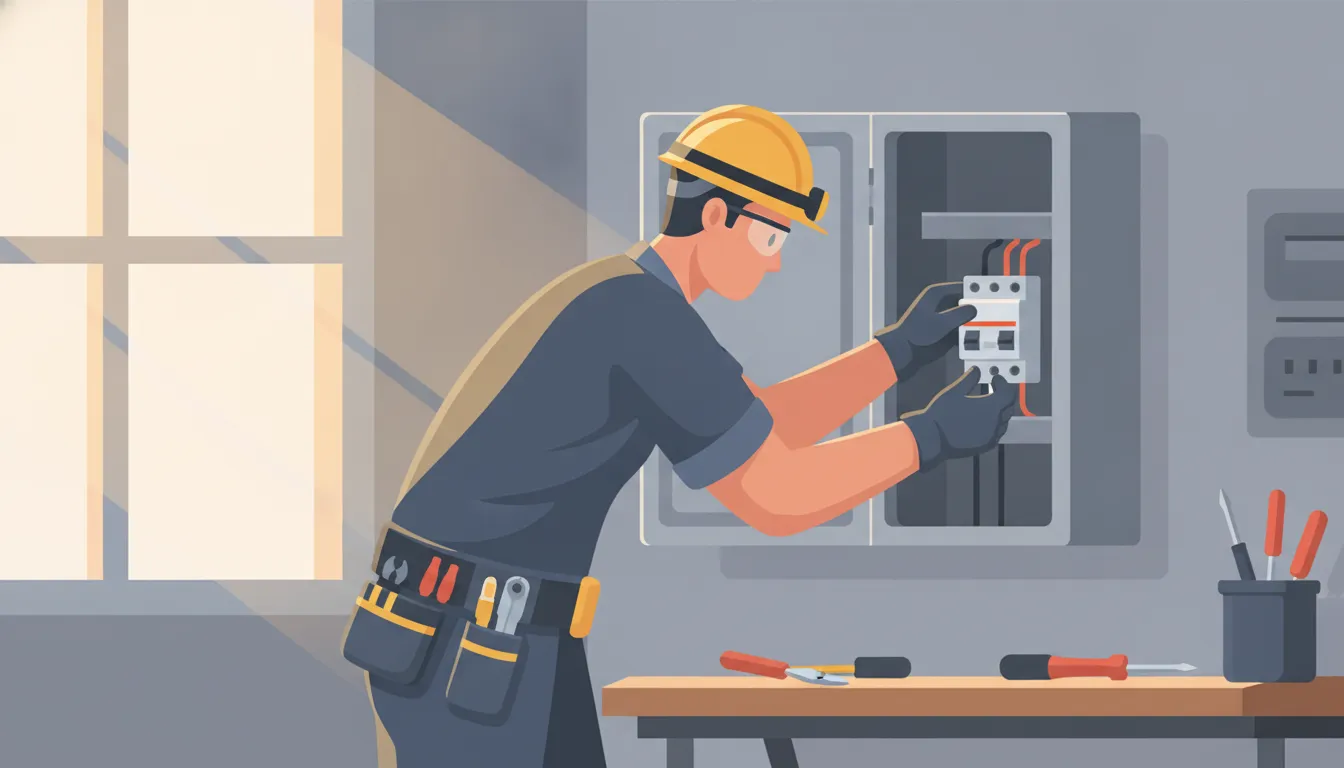
If installing a surge protector seems like a quick panel project, pause before opening the electrical panel. A whole-house unit connects to the home's electrical system, not just one outlet. The work requires shutting off power, working near energized service equipment, and making connections that protect every circuit. NIST notes that whole-house surge protectors are generally installed by a licensed professional electrician for proper wiring and safety: NIST's surge protection guidance.
You need to work inside the service panel
The clearest sign is that the installation involves the breaker panel rather than a plug-in device. Even after the main breaker is switched off, parts of the service equipment may remain energized. A professional can identify what is safe to access, select the correct breaker, route the conductors properly, and verify that the grounding and bonding connections support the device. A surge protective device is designed to divert excess voltage into the grounding system, so an incorrect connection can undermine its purpose and create a safety concern.
Your panel has limited space or an uncertain electrical capacity
Some installations need an available breaker position, while others require a different configuration based on the panel design. If the panel is full, has unusual wiring, shows signs of overheating, or has an outdated brand or component, do not force the device into place. A licensed electrician can determine whether the panel is compatible and whether electrical panel upgrades should be considered first. The right solution may involve improving the panel rather than adding a device to an already crowded or compromised system.
Your home has an older panel or you notice warning signs
Burning odors, buzzing, discoloration, warm panel surfaces, repeated breaker trips, flickering lights, or unexplained power interruptions deserve attention before surge protection is installed. These symptoms may point to a broader electrical problem that a surge protector will not correct. Older homes may also have grounding, capacity, or panel conditions that need evaluation. If you have seen any of these signs, an electrician should inspect the system instead of treating the surge protector as a standalone fix.
You want the installation checked after the work
A post-install check confirms that the protector is connected correctly, the breaker is labeled, the panel cover is secure, and the system is operating as intended. A professional electrical inspection can also identify related concerns, especially in a Florida home exposed to storms, lightning, and power fluctuations. Professional installation and verification give you protection designed around the actual condition of your electrical system, not a guess based on the device box.
Schedule Service to review whole-house surge protection for your home before the next storm season and get a clear recommendation for your panel and budget.
Frequently Asked Questions
Is a whole house surge protector a good idea?
Yes. It adds a first line of defense at the electrical panel against brief voltage spikes caused by utility activity, lightning, or appliances switching on and off. It can help protect electronics and appliances throughout the home, although sensitive equipment may still benefit from a point-of-use surge strip. The National Institute of Standards and Technology explains the role of whole-house and point-of-use protection.
Do I need a whole-house surge protector?
It is worth considering if your home contains expensive electronics, smart-home equipment, HVAC controls, an EV charger, or other sensitive systems. Florida homeowners may also want added protection because lightning and storm-related grid disturbances can damage equipment. A professional can review your panel, grounding, and existing protection before recommending an installation.
How much should it cost to have a whole house surge protector installed?
The total depends on the device, your electrical panel, grounding and bonding conditions, and the labor required for a safe, code-compliant installation. Ask for an upfront estimate that separates the equipment from any panel or grounding corrections. A licensed electrician should perform the work, not a homeowner working inside the panel, as recommended by NIST.
How do I pick the right whole house surge protector?
Start with a panel-compatible surge protective device installed by a qualified electrician. Compare its energy-handling rating, commonly listed in Joules, and ask whether your home needs additional point-of-use protection for especially sensitive electronics. The right choice should match your service equipment and grounding system rather than simply having the highest advertised rating.
Schedule Whole-House Surge Protection Service
If you want to protect your home's electronics and appliances from damaging power surges, a professional assessment can help determine the right whole-house solution for your electrical system. My Electrician FL can explain your options and handle the installation safely. Call 877-762-7483 to schedule service with a licensed electrician.